12 E-Commerce operators share how they scale operations. → Get the ERP Playbook.
Product Data in ERP: When Excel Breaks and a PIM System Becomes Essential
Product Data in ERP: When Excel Breaks and a PIM System Becomes Essential


The Engine Room of Your E-Commerce Success
200 products, three marketplaces, two languages — and everything still runs through Excel. What worked for 50 products eventually turns into a growth bottleneck. Because the problem is rarely the assortment itself. It’s the product data behind it: inconsistent, manually maintained, and not truly at home in any system.
This is exactly where Norbert Weckerle comes in. As CEO of Apollon GmbH, he has helped hundreds of companies over the past ten years turn data chaos into scalable processes. His conviction: “The common misconception is that this is simply a storage place for product information.”
But PIM is not a data warehouse. It is the engine room of modern e-commerce — and the crucial bridge between product data in the ERP and what customers ultimately see.
When Excel Battles Become a Growth Killer
You know the scenario: your e-commerce business is running smoothly. Product–market fit achieved, 100–200 products in the assortment. And then it happens: new markets emerge, additional channels are added, product variants explode. Suddenly you’re drowning in Excel sheets. Manual maintenance consumes time, inconsistent product data confuses customers, and every new marketplace launch causes cold sweats.
Pressure increases from all sides. Expanding internationally? Impossible without clean translations. Selling multi-channel? Each channel demands different data. And in the near future, challenges such as the Digital Product Passport for textiles will add regulatory requirements that simply cannot be managed without a proper system.
Norbert summarizes it clearly: “At a certain point, you have to increase operational efficiency — otherwise you simply won’t move forward.” Without a systemic solution, there is no scalability. Period.
“PIM and ERP are not tools to maintain the status quo. They are the key to scaling.”
The Engine Room of Your E-Commerce Success
200 products, three marketplaces, two languages — and everything still runs through Excel. What worked for 50 products eventually turns into a growth bottleneck. Because the problem is rarely the assortment itself. It’s the product data behind it: inconsistent, manually maintained, and not truly at home in any system.
This is exactly where Norbert Weckerle comes in. As CEO of Apollon GmbH, he has helped hundreds of companies over the past ten years turn data chaos into scalable processes. His conviction: “The common misconception is that this is simply a storage place for product information.”
But PIM is not a data warehouse. It is the engine room of modern e-commerce — and the crucial bridge between product data in the ERP and what customers ultimately see.
When Excel Battles Become a Growth Killer
You know the scenario: your e-commerce business is running smoothly. Product–market fit achieved, 100–200 products in the assortment. And then it happens: new markets emerge, additional channels are added, product variants explode. Suddenly you’re drowning in Excel sheets. Manual maintenance consumes time, inconsistent product data confuses customers, and every new marketplace launch causes cold sweats.
Pressure increases from all sides. Expanding internationally? Impossible without clean translations. Selling multi-channel? Each channel demands different data. And in the near future, challenges such as the Digital Product Passport for textiles will add regulatory requirements that simply cannot be managed without a proper system.
Norbert summarizes it clearly: “At a certain point, you have to increase operational efficiency — otherwise you simply won’t move forward.” Without a systemic solution, there is no scalability. Period.
“PIM and ERP are not tools to maintain the status quo. They are the key to scaling.”
Hol dir das E-Commerce-ERP-Playbook
Hol dir das E-Commerce-ERP-Playbook
Ein strukturierter Leitfaden für die wichtigsten ERP-Entscheidung im wachsenden E-Commerce (+60 Seiten, 12 Expertinnen).
Ein strukturierter Leitfaden für die wichtigsten ERP-Entscheidung im wachsenden E-Commerce (+60 Seiten, 12 Expertinnen).
Mit Erfahrungen von Expert*innen, die täglich ERP, Ops & Zahlen verantworten.
Hol dir das E-Commerce-ERP-Playbook
Ein strukturierter Leitfaden für die wichtigsten ERP-Entscheidung im wachsenden E-Commerce (+60 Seiten, 12 Expertinnen).
Mit Erfahrungen von Expert*innen, die täglich ERP, Ops & Zahlen verantworten.
ERP x PIM: Working Hand in Hand Instead of Competing
A modern love story: “PIM and ERP are not competing systems — at the end of the day, they work hand in hand.”
While the ERP maintains operational control over master data — procurement, inventory, pricing — the PIM system in e-commerce manages the semantic contextualization required for external communication. In short: PIM is an essential extension of your commerce platform.
PIM is not just an IT tool — just like implementing an ERP, it is a change project with cultural implications. Once established, it quickly becomes an integral part of your company’s DNA.
Turning Product Data into a Competitive Advantage
Setup: The Right Architecture
In roughly 80% of cases, the ERP remains the leading source for master data even when a PIM is introduced — SKUs, base prices, and availability flow from ERP into PIM. The PIM then handles semantic and media enrichment for external communication.
“A PIM system ensures that product information is delivered consistently — but also context-sensitively — across different touchpoints, from the online shop to marketplaces.”
Norbert observes a growing trend: PIM-led architectures are becoming more popular. Bidirectional interfaces are also possible. The one-way street between ERP and PIM can evolve into a true data highway. Ultimately, the solution should adapt to your processes: “It really depends on how the customer approaches product creation and management.”
Why the shift toward PIM-led architectures? Many shop systems are currently exploring how product data can be fed into LLMs. A PIM makes your shop discoverable for ChatGPT and similar AI systems.
Execution: Making Data Quality Measurable
Define maturity levels: from 85% completeness onward, a product is considered market-ready. That means: SEO-optimized texts? Check. Images from all angles? Check. Translations? Automated via AI services. Workflow automation handles image sourcing, text generation, and translations. Finally — no more manual Excel battles.
Iteration: Channel-Specific Optimization
Once the single source of truth is established, fine-tuning begins. Amazon requires different copy than your own shop? No problem. Otto demands specific attributes? Covered. Hyper-personalization as the next step? One of Norbert’s clients even generates dedicated microsites with 3D views for configured products.
Numbers That Convince
The hard facts speak for themselves:
40% faster time-to-market
60% reduction in manual maintenance effort
25% fewer customer service inquiries
50% fewer returns
With hyper-personalization: 15–25% higher conversion rates
“If you have good product data, you can sell well.” The formula is as simple as it is powerful.
Norbert is blunt about expectations:
“If you think you can implement a PIM system for €5,000 per year — that’s simply not realistic.”
A realistic estimate: at least €12,000 annually, potentially significantly more. Plus one-time project costs for setup and process design. For companies with fewer than 50 employees, it may still be too early. But the investment pays off — particularly in international expansion, where up to 50% of costs can be saved later on.
Three Golden Truths About PIM
Learning #1: “PIM is the engine room.”
PIM is not just a data repository — it is the process engine that transforms product information into sales performance.
Learning #2: “Multi-channel is no longer optional.”
Relying solely on a shop system is no longer sufficient. Channels are increasing, not decreasing. The interplay between ERP and PIM enables efficient multichannel management.
Learning #3: Data quality is measurable.
ROI from improved conversion rates is directly measurable. But the hidden lever lies in process efficiency — the time your teams gain to focus on higher-value work.
Universal truth: Think in processes, not in tools.
PIM is not a technical transformation — it is a cultural one.
ERP x PIM: Working Hand in Hand Instead of Competing
A modern love story: “PIM and ERP are not competing systems — at the end of the day, they work hand in hand.”
While the ERP maintains operational control over master data — procurement, inventory, pricing — the PIM system in e-commerce manages the semantic contextualization required for external communication. In short: PIM is an essential extension of your commerce platform.
PIM is not just an IT tool — just like implementing an ERP, it is a change project with cultural implications. Once established, it quickly becomes an integral part of your company’s DNA.
Turning Product Data into a Competitive Advantage
Setup: The Right Architecture
In roughly 80% of cases, the ERP remains the leading source for master data even when a PIM is introduced — SKUs, base prices, and availability flow from ERP into PIM. The PIM then handles semantic and media enrichment for external communication.
“A PIM system ensures that product information is delivered consistently — but also context-sensitively — across different touchpoints, from the online shop to marketplaces.”
Norbert observes a growing trend: PIM-led architectures are becoming more popular. Bidirectional interfaces are also possible. The one-way street between ERP and PIM can evolve into a true data highway. Ultimately, the solution should adapt to your processes: “It really depends on how the customer approaches product creation and management.”
Why the shift toward PIM-led architectures? Many shop systems are currently exploring how product data can be fed into LLMs. A PIM makes your shop discoverable for ChatGPT and similar AI systems.
Execution: Making Data Quality Measurable
Define maturity levels: from 85% completeness onward, a product is considered market-ready. That means: SEO-optimized texts? Check. Images from all angles? Check. Translations? Automated via AI services. Workflow automation handles image sourcing, text generation, and translations. Finally — no more manual Excel battles.
Iteration: Channel-Specific Optimization
Once the single source of truth is established, fine-tuning begins. Amazon requires different copy than your own shop? No problem. Otto demands specific attributes? Covered. Hyper-personalization as the next step? One of Norbert’s clients even generates dedicated microsites with 3D views for configured products.
Numbers That Convince
The hard facts speak for themselves:
40% faster time-to-market
60% reduction in manual maintenance effort
25% fewer customer service inquiries
50% fewer returns
With hyper-personalization: 15–25% higher conversion rates
“If you have good product data, you can sell well.” The formula is as simple as it is powerful.
Norbert is blunt about expectations:
“If you think you can implement a PIM system for €5,000 per year — that’s simply not realistic.”
A realistic estimate: at least €12,000 annually, potentially significantly more. Plus one-time project costs for setup and process design. For companies with fewer than 50 employees, it may still be too early. But the investment pays off — particularly in international expansion, where up to 50% of costs can be saved later on.
Three Golden Truths About PIM
Learning #1: “PIM is the engine room.”
PIM is not just a data repository — it is the process engine that transforms product information into sales performance.
Learning #2: “Multi-channel is no longer optional.”
Relying solely on a shop system is no longer sufficient. Channels are increasing, not decreasing. The interplay between ERP and PIM enables efficient multichannel management.
Learning #3: Data quality is measurable.
ROI from improved conversion rates is directly measurable. But the hidden lever lies in process efficiency — the time your teams gain to focus on higher-value work.
Universal truth: Think in processes, not in tools.
PIM is not a technical transformation — it is a cultural one.
Hol dir das E-Commerce-ERP-Playbook
Ein strukturierter Leitfaden für die wichtigsten ERP-Entscheidung im wachsenden E-Commerce (+60 Seiten, 12 Expertinnen).
Mit Erfahrungen von Expert*innen, die täglich ERP, Ops & Zahlen verantworten.
Tools & Templates to Get Started
Norbert is active as a speaker and on LinkedIn and welcomes exchange and insights. Our key takeaways from the conversation:
Be careful:
Don’t confuse PIM with a CMS.
Don’t underestimate the change management component.
Involve future users early — otherwise you risk building something that misses the actual need.
Norbert’s Outlook
In 3–5 years, SEO will continue losing relevance and increasingly be replaced by GEO (Generative Engine Optimization). Shop frontends will lose significance — AI will purchase directly. At the latest by then, machine-readable product databases will be indispensable to remain discoverable. For a deep dive, see the whitepaper on AI in DAM systems.
The PIM Readiness Checklist
✓ More than 100–200 products in your assortment?
✓ More than two active sales channels?
✓ International expansion planned?
✓ Excel chaos in product management?
✓ Team larger than 50 employees?
→ Three out of five? Then now is the time for PIM. It’s not a luxury. It’s the key to scaling.
FAQs
1. Why is product data critical for ERP?
Many companies treat product data in ERP as a side issue — just a few fields that need to be filled in. That underestimates how deeply this data affects every operational process. Incomplete or inconsistent product information creates downstream errors across procurement, inventory, pricing, and shipping — often without anyone recognizing the root cause. Product data is not static input. It is the fuel that keeps ERP processes running. Treating it as a mere administrative obligation means building your entire operational chain on unstable foundations — something that only becomes visible once scaling increases the pressure.
2. When do I need a PIM instead of relying solely on ERP?
PIM versus ERP is often framed as an either-or question — which is already the first misconception. ERP manages operational master data — pricing, stock levels, supply chains. But as soon as the same products need to be presented differently across contexts — different copy for Amazon versus your own shop, different images for print versus social media, different languages for new markets — ERP reaches its conceptual limits. It simply wasn’t designed for that purpose. The real question is not “PIM instead of ERP?” but rather: Is it still enough to manage product information operationally, or do you now need to manage it communicatively as well?
3. What problems arise from poor master data?
The obvious consequences — incorrect descriptions, missing images, inconsistent dimensions — are only the surface. Beneath that lies a network of hidden costs: customer service teams answering questions that would never arise with better data. Increasing return rates because expectations and reality don’t match. Marketplace listings being rejected or downgraded. Employees spending time on manual corrections instead of value-creating work. The tricky part: poor master data deteriorates over time because workarounds introduce new inconsistencies. Without a deliberate counter-approach, the decline accelerates.
4. What role does product data play between shop, ERP, logistics, and accounting?
Product data is the connecting element between systems that would otherwise operate in isolation. The shop needs optimized sales content, ERP manages commercial master data, logistics requires physical attributes like weight and dimensions, accounting works with product groups and customs classifications. If these data points are not sourced consistently, discrepancies arise that reinforce each other. An incorrect weight in ERP leads to wrong shipping costs in the shop and faulty customs documentation in exports. The challenge is less technical than organizational: who maintains which data — and where does the single source of truth reside?
5. When is ERP-based product data sufficient — and when is a separate PIM system required?
As long as a company sells a limited number of products through a single channel in one language, ERP-based data maintenance may suffice. The boundary is crossed when contextualization begins. Once the same product must be prepared differently for various channels, markets, or target audiences, complexity arises that ERP cannot adequately handle — at least not without significant workarounds. The typical tipping point is a growing assortment, the second or third sales channel, and at the latest, the first international expansion. The decisive factor is not company size, but the complexity of output channels.
Tools & Templates to Get Started
Norbert is active as a speaker and on LinkedIn and welcomes exchange and insights. Our key takeaways from the conversation:
Be careful:
Don’t confuse PIM with a CMS.
Don’t underestimate the change management component.
Involve future users early — otherwise you risk building something that misses the actual need.
Norbert’s Outlook
In 3–5 years, SEO will continue losing relevance and increasingly be replaced by GEO (Generative Engine Optimization). Shop frontends will lose significance — AI will purchase directly. At the latest by then, machine-readable product databases will be indispensable to remain discoverable. For a deep dive, see the whitepaper on AI in DAM systems.
The PIM Readiness Checklist
✓ More than 100–200 products in your assortment?
✓ More than two active sales channels?
✓ International expansion planned?
✓ Excel chaos in product management?
✓ Team larger than 50 employees?
→ Three out of five? Then now is the time for PIM. It’s not a luxury. It’s the key to scaling.
FAQs
1. Why is product data critical for ERP?
Many companies treat product data in ERP as a side issue — just a few fields that need to be filled in. That underestimates how deeply this data affects every operational process. Incomplete or inconsistent product information creates downstream errors across procurement, inventory, pricing, and shipping — often without anyone recognizing the root cause. Product data is not static input. It is the fuel that keeps ERP processes running. Treating it as a mere administrative obligation means building your entire operational chain on unstable foundations — something that only becomes visible once scaling increases the pressure.
2. When do I need a PIM instead of relying solely on ERP?
PIM versus ERP is often framed as an either-or question — which is already the first misconception. ERP manages operational master data — pricing, stock levels, supply chains. But as soon as the same products need to be presented differently across contexts — different copy for Amazon versus your own shop, different images for print versus social media, different languages for new markets — ERP reaches its conceptual limits. It simply wasn’t designed for that purpose. The real question is not “PIM instead of ERP?” but rather: Is it still enough to manage product information operationally, or do you now need to manage it communicatively as well?
3. What problems arise from poor master data?
The obvious consequences — incorrect descriptions, missing images, inconsistent dimensions — are only the surface. Beneath that lies a network of hidden costs: customer service teams answering questions that would never arise with better data. Increasing return rates because expectations and reality don’t match. Marketplace listings being rejected or downgraded. Employees spending time on manual corrections instead of value-creating work. The tricky part: poor master data deteriorates over time because workarounds introduce new inconsistencies. Without a deliberate counter-approach, the decline accelerates.
4. What role does product data play between shop, ERP, logistics, and accounting?
Product data is the connecting element between systems that would otherwise operate in isolation. The shop needs optimized sales content, ERP manages commercial master data, logistics requires physical attributes like weight and dimensions, accounting works with product groups and customs classifications. If these data points are not sourced consistently, discrepancies arise that reinforce each other. An incorrect weight in ERP leads to wrong shipping costs in the shop and faulty customs documentation in exports. The challenge is less technical than organizational: who maintains which data — and where does the single source of truth reside?
5. When is ERP-based product data sufficient — and when is a separate PIM system required?
As long as a company sells a limited number of products through a single channel in one language, ERP-based data maintenance may suffice. The boundary is crossed when contextualization begins. Once the same product must be prepared differently for various channels, markets, or target audiences, complexity arises that ERP cannot adequately handle — at least not without significant workarounds. The typical tipping point is a growing assortment, the second or third sales channel, and at the latest, the first international expansion. The decisive factor is not company size, but the complexity of output channels.
More articles

How to Start an ERP Project Successfully: 9 Decisions That Need to Be Made Before Implementation
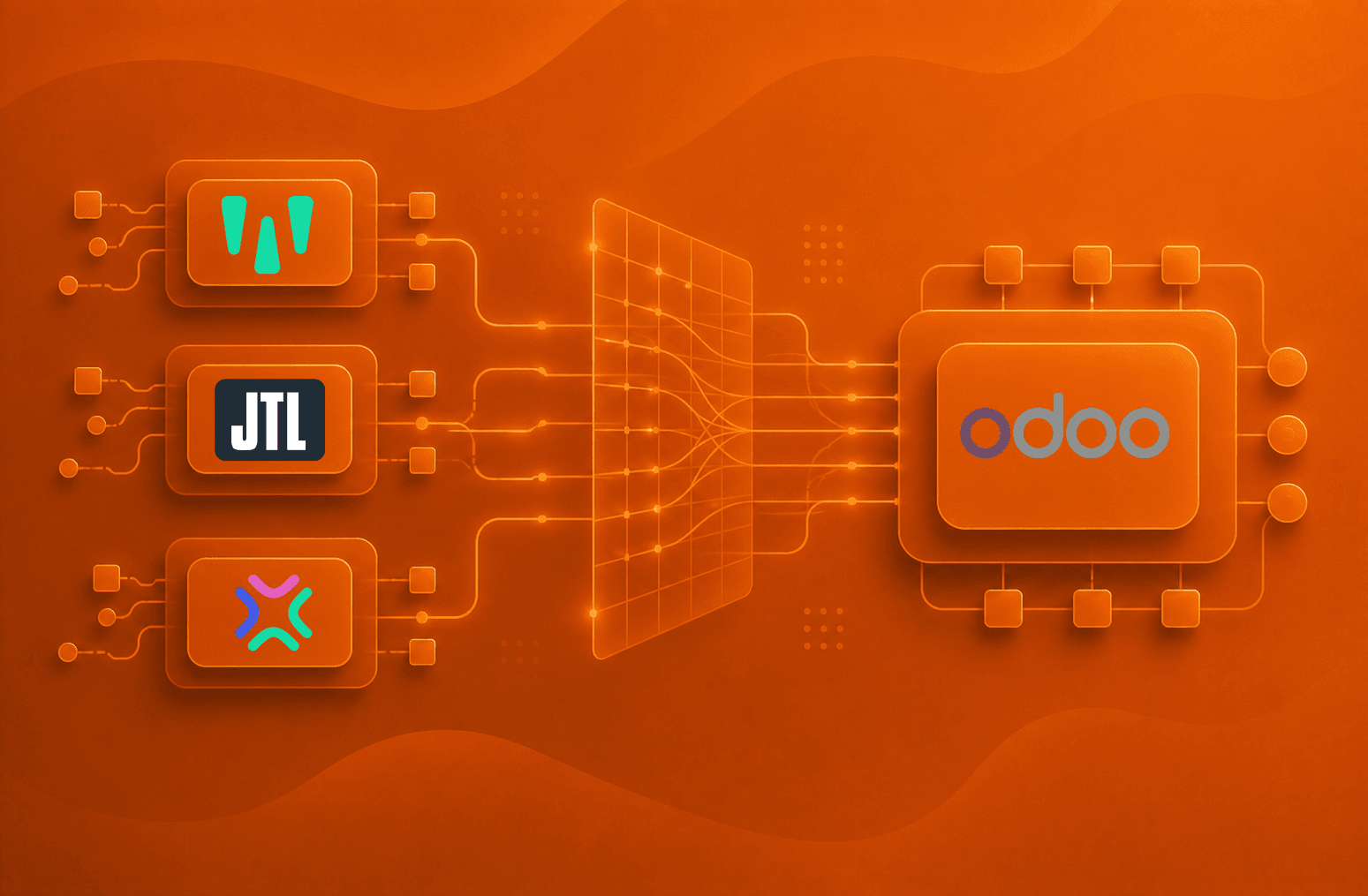
Switching ERP from weclapp, Xentral or JTL to Odoo: How companies migrate cleanly (process, risks and common mistakes)

ERP Implementation: 7 Risks That Make Projects Fail (and How to Spot Them Early)

Best-of-Breed vs. Best-of-Suite in Mid-Market: HubSpot vs. Odoo in a Reality Check

Controlling ERP in E-Commerce: How to Scale Without Losing Financial Control

Customer Service ERP: How to Integrate Service, ERP and Logistics Properly

E-Commerce Accounting ERP: When 60,000 Monthly Bookings Break Your System

E-Commerce Logistics & ERP: Why Fulfillment Becomes Structural at Scale

Made with🫀in Berlin © 2026 bobco GmbH
Made with🫀in Berlin © 2026 bobco GmbH
Made with🫀in Berlin © 2026 bobco GmbH