12 E-Commerce operators share how they scale operations. → Get the ERP Playbook.
E-Commerce Strategy for B2B: Why D2C Is a Business Model, Not a Channel
E-Commerce Strategy for B2B: Why D2C Is a Business Model, Not a Channel


Why an e-commerce strategy requires more than channel thinking
Over 15 years of experience in e-commerce, Timo Daedrich has identified a recurring pattern: established B2B mid-sized companies underestimate both the complexity of their D2C transformation — and its potential.
As an independent consultant, he has spent the past six years supporting manufacturing companies in building direct-to-consumer business models. His experience shows: trying to force e-commerce into existing legacy systems can significantly prolong projects and drive up costs — whereas more autonomous approaches often reach results faster.
The reality of established structures
Timo paints a clear picture of his day-to-day work as a consultant: “In almost no case — effectively 0% — do you enter a situation where you’re managing a greenfield approach from scratch.” The starting point is nearly always complex. Established mid-sized companies with successful B2B operations want to enter the D2C space. Market pressure is increasing, end customers expect direct purchasing options, and at the same time, years of accumulated IT systems and embedded processes are in place.
Timo describes a central problem this way: “A major challenge is that decisions are often made by people who think from within the traditional business model.” These decision-makers primarily see e-commerce as an additional sales channel — a fundamental misjudgment.
A new channel: A new business model
“What’s missing is the shift in perspective — recognizing that this is not a new sales channel, but a completely new business model being implemented,” Timo explains. This realization requires “corresponding investments and foundational work” — the core of any sustainable e-commerce strategy.
Reality, however, shows that many companies struggle to balance integration and agility. “When in doubt, decisions are more often not made than made,” Timo observes, “and when in doubt, companies tend to rely on what already exists rather than on something new, simply to pursue perceived risk minimization.”
Should D2C be tightly integrated into existing systems, or kept autonomous and agile? Timo sees strong arguments for both approaches: “On the one hand, perhaps efficiency and shared use of resources. On the other hand, perhaps speed, time-to-market — maybe being the speedboat of the organization.”
Why an e-commerce strategy requires more than channel thinking
Over 15 years of experience in e-commerce, Timo Daedrich has identified a recurring pattern: established B2B mid-sized companies underestimate both the complexity of their D2C transformation — and its potential.
As an independent consultant, he has spent the past six years supporting manufacturing companies in building direct-to-consumer business models. His experience shows: trying to force e-commerce into existing legacy systems can significantly prolong projects and drive up costs — whereas more autonomous approaches often reach results faster.
The reality of established structures
Timo paints a clear picture of his day-to-day work as a consultant: “In almost no case — effectively 0% — do you enter a situation where you’re managing a greenfield approach from scratch.” The starting point is nearly always complex. Established mid-sized companies with successful B2B operations want to enter the D2C space. Market pressure is increasing, end customers expect direct purchasing options, and at the same time, years of accumulated IT systems and embedded processes are in place.
Timo describes a central problem this way: “A major challenge is that decisions are often made by people who think from within the traditional business model.” These decision-makers primarily see e-commerce as an additional sales channel — a fundamental misjudgment.
A new channel: A new business model
“What’s missing is the shift in perspective — recognizing that this is not a new sales channel, but a completely new business model being implemented,” Timo explains. This realization requires “corresponding investments and foundational work” — the core of any sustainable e-commerce strategy.
Reality, however, shows that many companies struggle to balance integration and agility. “When in doubt, decisions are more often not made than made,” Timo observes, “and when in doubt, companies tend to rely on what already exists rather than on something new, simply to pursue perceived risk minimization.”
Should D2C be tightly integrated into existing systems, or kept autonomous and agile? Timo sees strong arguments for both approaches: “On the one hand, perhaps efficiency and shared use of resources. On the other hand, perhaps speed, time-to-market — maybe being the speedboat of the organization.”
Hol dir das E-Commerce-ERP-Playbook
Hol dir das E-Commerce-ERP-Playbook
Ein strukturierter Leitfaden für die wichtigsten ERP-Entscheidung im wachsenden E-Commerce (+60 Seiten, 12 Expertinnen).
Ein strukturierter Leitfaden für die wichtigsten ERP-Entscheidung im wachsenden E-Commerce (+60 Seiten, 12 Expertinnen).
Mit Erfahrungen von Expert*innen, die täglich ERP, Ops & Zahlen verantworten.
Hol dir das E-Commerce-ERP-Playbook
Ein strukturierter Leitfaden für die wichtigsten ERP-Entscheidung im wachsenden E-Commerce (+60 Seiten, 12 Expertinnen).
Mit Erfahrungen von Expert*innen, die täglich ERP, Ops & Zahlen verantworten.
The MVP approach as a path to success
“What often works well is creating a form of encapsulation, proceeding iteratively — having an MVP approach: starting lean and continuously expanding from there,” Timo explains. Crucially, this means: “Doing so in a context that does not necessarily take place within the existing world.”
MVP, or ‘Minimum Viable Product’ — the smallest functional core of a system that can go live quickly. In the D2C space, MVPs allow companies to test real customer reactions rapidly and with minimal effort, validate product-market fit and sales strategies based on data, and structure e-commerce growth from the outset.
The advantages of this encapsulation are clear: “The more encapsulated the e-commerce business is implemented, the more you can rely on standards in the end.” Concretely, this means using standardized shop systems, established marketplace integrations, proven logistics providers — instead of forcing everything into existing systems through complex integration efforts.
The cost of forced integration
Timo recounts a specific project that serves as a cautionary tale: “The project dragged on for a year or a year and a half.” His conclusion is sobering: “You could probably have set up a Shopify instance alongside for a fifth or a tenth of the price and achieved the same goal in three or six months.”
This experience is not an isolated case. Forced integration into legacy systems regularly leads to extended project timelines, exploding budgets, and frustrated teams — while the actual business objectives fade into the background.
The core challenges of your e-commerce expansion
From Timo’s consulting experience, three recurring pain points emerge:
1. Political resistance
Existing IT departments and governance structures block new approaches. Fear of parallel structures and the desire to have “everything from one source” prevent pragmatic solutions.
2. Lack of e-commerce understanding
The differences between B2B and B2C/e-commerce are underestimated. While B2B processes are optimized for efficiency and material costs, e-commerce requires focus on customer experience, rapid iteration, and new KPIs such as return rates and reviews.
3. Decision culture
“When in doubt, decisions are more often not made than made.” This observation runs through many projects. Fear of making the wrong decision paradoxically leads to the biggest mistakes: missed opportunities and endlessly prolonged initiatives.
Timo’s practical recommendations
Based on his experience, Timo recommends a pragmatic approach:
Start small, grow iteratively: An MVP approach with minimal setup enables fast learning and adjustment. “Starting lean and expanding continuously” is more promising than attempting a big-bang launch.
Use standards: Accept default shop systems as de facto standards for many e-commerce use cases instead of over-customizing. Standard interfaces and established tools reduce complexity and costs.
Encapsulation over forced integration: Build e-commerce as a distinct unit, create only necessary connections to existing systems (master data, accounting), and operate everything else autonomously. This creates a scalable e-commerce organization that is not slowed down by legacy systems.
Processes before systems: Clarify the business model and processes first, then select the appropriate systems — not the other way around.
The big decision
The fundamental question mid-sized companies face: Do they want to be the agile speedboat that conquers new markets? Or do they risk becoming a sluggish tanker that fails under its own complexity?
Timo’s experience shows: successful e-commerce transformations require the courage to treat e-commerce as an independent business model — with its own rules, processes, and systems. Trying to force the new world into old structures usually results in overly long projects and excessive costs.
For deeper exploration, Timo recommends exchanging with experts from complementary areas: product information management (PIM), integration architecture, automation and low-code/no-code approaches, as well as e-commerce-specific logistics and finance.
His core advice: “E-commerce is not a sales channel, but a completely new business model.” This insight should stand at the beginning of every e-commerce strategy.
The MVP approach as a path to success
“What often works well is creating a form of encapsulation, proceeding iteratively — having an MVP approach: starting lean and continuously expanding from there,” Timo explains. Crucially, this means: “Doing so in a context that does not necessarily take place within the existing world.”
MVP, or ‘Minimum Viable Product’ — the smallest functional core of a system that can go live quickly. In the D2C space, MVPs allow companies to test real customer reactions rapidly and with minimal effort, validate product-market fit and sales strategies based on data, and structure e-commerce growth from the outset.
The advantages of this encapsulation are clear: “The more encapsulated the e-commerce business is implemented, the more you can rely on standards in the end.” Concretely, this means using standardized shop systems, established marketplace integrations, proven logistics providers — instead of forcing everything into existing systems through complex integration efforts.
The cost of forced integration
Timo recounts a specific project that serves as a cautionary tale: “The project dragged on for a year or a year and a half.” His conclusion is sobering: “You could probably have set up a Shopify instance alongside for a fifth or a tenth of the price and achieved the same goal in three or six months.”
This experience is not an isolated case. Forced integration into legacy systems regularly leads to extended project timelines, exploding budgets, and frustrated teams — while the actual business objectives fade into the background.
The core challenges of your e-commerce expansion
From Timo’s consulting experience, three recurring pain points emerge:
1. Political resistance
Existing IT departments and governance structures block new approaches. Fear of parallel structures and the desire to have “everything from one source” prevent pragmatic solutions.
2. Lack of e-commerce understanding
The differences between B2B and B2C/e-commerce are underestimated. While B2B processes are optimized for efficiency and material costs, e-commerce requires focus on customer experience, rapid iteration, and new KPIs such as return rates and reviews.
3. Decision culture
“When in doubt, decisions are more often not made than made.” This observation runs through many projects. Fear of making the wrong decision paradoxically leads to the biggest mistakes: missed opportunities and endlessly prolonged initiatives.
Timo’s practical recommendations
Based on his experience, Timo recommends a pragmatic approach:
Start small, grow iteratively: An MVP approach with minimal setup enables fast learning and adjustment. “Starting lean and expanding continuously” is more promising than attempting a big-bang launch.
Use standards: Accept default shop systems as de facto standards for many e-commerce use cases instead of over-customizing. Standard interfaces and established tools reduce complexity and costs.
Encapsulation over forced integration: Build e-commerce as a distinct unit, create only necessary connections to existing systems (master data, accounting), and operate everything else autonomously. This creates a scalable e-commerce organization that is not slowed down by legacy systems.
Processes before systems: Clarify the business model and processes first, then select the appropriate systems — not the other way around.
The big decision
The fundamental question mid-sized companies face: Do they want to be the agile speedboat that conquers new markets? Or do they risk becoming a sluggish tanker that fails under its own complexity?
Timo’s experience shows: successful e-commerce transformations require the courage to treat e-commerce as an independent business model — with its own rules, processes, and systems. Trying to force the new world into old structures usually results in overly long projects and excessive costs.
For deeper exploration, Timo recommends exchanging with experts from complementary areas: product information management (PIM), integration architecture, automation and low-code/no-code approaches, as well as e-commerce-specific logistics and finance.
His core advice: “E-commerce is not a sales channel, but a completely new business model.” This insight should stand at the beginning of every e-commerce strategy.
Hol dir das E-Commerce-ERP-Playbook
Ein strukturierter Leitfaden für die wichtigsten ERP-Entscheidung im wachsenden E-Commerce (+60 Seiten, 12 Expertinnen).
Mit Erfahrungen von Expert*innen, die täglich ERP, Ops & Zahlen verantworten.
FAQ: E-Commerce Strategy for Established Companies
1. How do I develop a sustainable e-commerce strategy — beyond isolated measures and tools?
The most common mistake in e-commerce planning: confusing strategy with tool selection or channel planning. Asking “Shopify or Shopware?” before clarifying which business model is actually being built means starting at the wrong end. A sustainable e-commerce strategy begins with defining the target vision — independent of existing systems and internal sensitivities. This also means asking uncomfortable questions: Is e-commerce a complementary sales path, or an independent business model with its own logic? This distinction fundamentally shapes all subsequent decisions. Tools and measures follow the strategy — not the other way around. Reversing this logic means optimizing symptoms at best.
2. What defines a good e-commerce strategy for an already established company?
Established companies carry a burden that startups do not: functioning structures that no one wants to jeopardize lightly. This is precisely where the strategic dilemma lies. A good strategy recognizes that integration into existing systems is not automatically the safer path — even if it feels that way. It deliberately defines which connections to the existing environment are necessary and how much autonomy the new business model requires to remain operationally capable. This requires an honest assessment: Which established structures are strengths, and which have become constraints? Organizations struggle with this distinction because it questions their own past decisions.
3. At what point does a company actually need an explicit e-commerce strategy?
The question suggests that there is a clear threshold for when an e-commerce strategy becomes necessary — a certain revenue level, team size, or maturity stage. This is misleading. The real indicator is different: as soon as e-commerce decisions are regularly influenced or blocked by other parts of the organization, strategic clarity is missing. This can happen in a team of five or in a company of five hundred. Without an explicit strategy, decisions become reactive — driven by whoever is loudest or whichever department controls the most resources. A strategy creates a reference framework against which individual decisions can be evaluated, instead of renegotiating them each time.
4. What typical mistakes occur when developing an e-commerce strategy?
A recurring pattern: e-commerce strategies are developed by people whose experience lies in the existing business model. This is understandable — but risky. B2B thinking and e-commerce reality follow different logics. Anyone who has spent years optimizing efficiency and material costs will systematically underestimate what customer experience, return rates, or review management actually entail. A second mistake: confusing risk minimization with non-decision. Existing systems are favored not because they are better suited, but because they are familiar. Paradoxically, this perceived caution often increases real risk — through missed time windows and exploding project costs.
5. Which strategic questions are typically pushed aside by day-to-day e-commerce operations?
Day-to-day e-commerce creates a specific kind of blindness: it rewards solving visible problems and penalizes thinking about invisible ones. As a result, the questions most often pushed aside are those whose neglect does not cause immediate pain. For example: How autonomous should the e-commerce business operate from existing systems? Which internal resistances will slow down the project — and how should they be addressed? What does it actually mean when we speak of a “new sales channel” instead of a “new business model”? These questions do not disappear when ignored. They return — usually in the form of project delays, budget overruns, or failed launches.
FAQ: E-Commerce Strategy for Established Companies
1. How do I develop a sustainable e-commerce strategy — beyond isolated measures and tools?
The most common mistake in e-commerce planning: confusing strategy with tool selection or channel planning. Asking “Shopify or Shopware?” before clarifying which business model is actually being built means starting at the wrong end. A sustainable e-commerce strategy begins with defining the target vision — independent of existing systems and internal sensitivities. This also means asking uncomfortable questions: Is e-commerce a complementary sales path, or an independent business model with its own logic? This distinction fundamentally shapes all subsequent decisions. Tools and measures follow the strategy — not the other way around. Reversing this logic means optimizing symptoms at best.
2. What defines a good e-commerce strategy for an already established company?
Established companies carry a burden that startups do not: functioning structures that no one wants to jeopardize lightly. This is precisely where the strategic dilemma lies. A good strategy recognizes that integration into existing systems is not automatically the safer path — even if it feels that way. It deliberately defines which connections to the existing environment are necessary and how much autonomy the new business model requires to remain operationally capable. This requires an honest assessment: Which established structures are strengths, and which have become constraints? Organizations struggle with this distinction because it questions their own past decisions.
3. At what point does a company actually need an explicit e-commerce strategy?
The question suggests that there is a clear threshold for when an e-commerce strategy becomes necessary — a certain revenue level, team size, or maturity stage. This is misleading. The real indicator is different: as soon as e-commerce decisions are regularly influenced or blocked by other parts of the organization, strategic clarity is missing. This can happen in a team of five or in a company of five hundred. Without an explicit strategy, decisions become reactive — driven by whoever is loudest or whichever department controls the most resources. A strategy creates a reference framework against which individual decisions can be evaluated, instead of renegotiating them each time.
4. What typical mistakes occur when developing an e-commerce strategy?
A recurring pattern: e-commerce strategies are developed by people whose experience lies in the existing business model. This is understandable — but risky. B2B thinking and e-commerce reality follow different logics. Anyone who has spent years optimizing efficiency and material costs will systematically underestimate what customer experience, return rates, or review management actually entail. A second mistake: confusing risk minimization with non-decision. Existing systems are favored not because they are better suited, but because they are familiar. Paradoxically, this perceived caution often increases real risk — through missed time windows and exploding project costs.
5. Which strategic questions are typically pushed aside by day-to-day e-commerce operations?
Day-to-day e-commerce creates a specific kind of blindness: it rewards solving visible problems and penalizes thinking about invisible ones. As a result, the questions most often pushed aside are those whose neglect does not cause immediate pain. For example: How autonomous should the e-commerce business operate from existing systems? Which internal resistances will slow down the project — and how should they be addressed? What does it actually mean when we speak of a “new sales channel” instead of a “new business model”? These questions do not disappear when ignored. They return — usually in the form of project delays, budget overruns, or failed launches.
More articles

How to Start an ERP Project Successfully: 9 Decisions That Need to Be Made Before Implementation
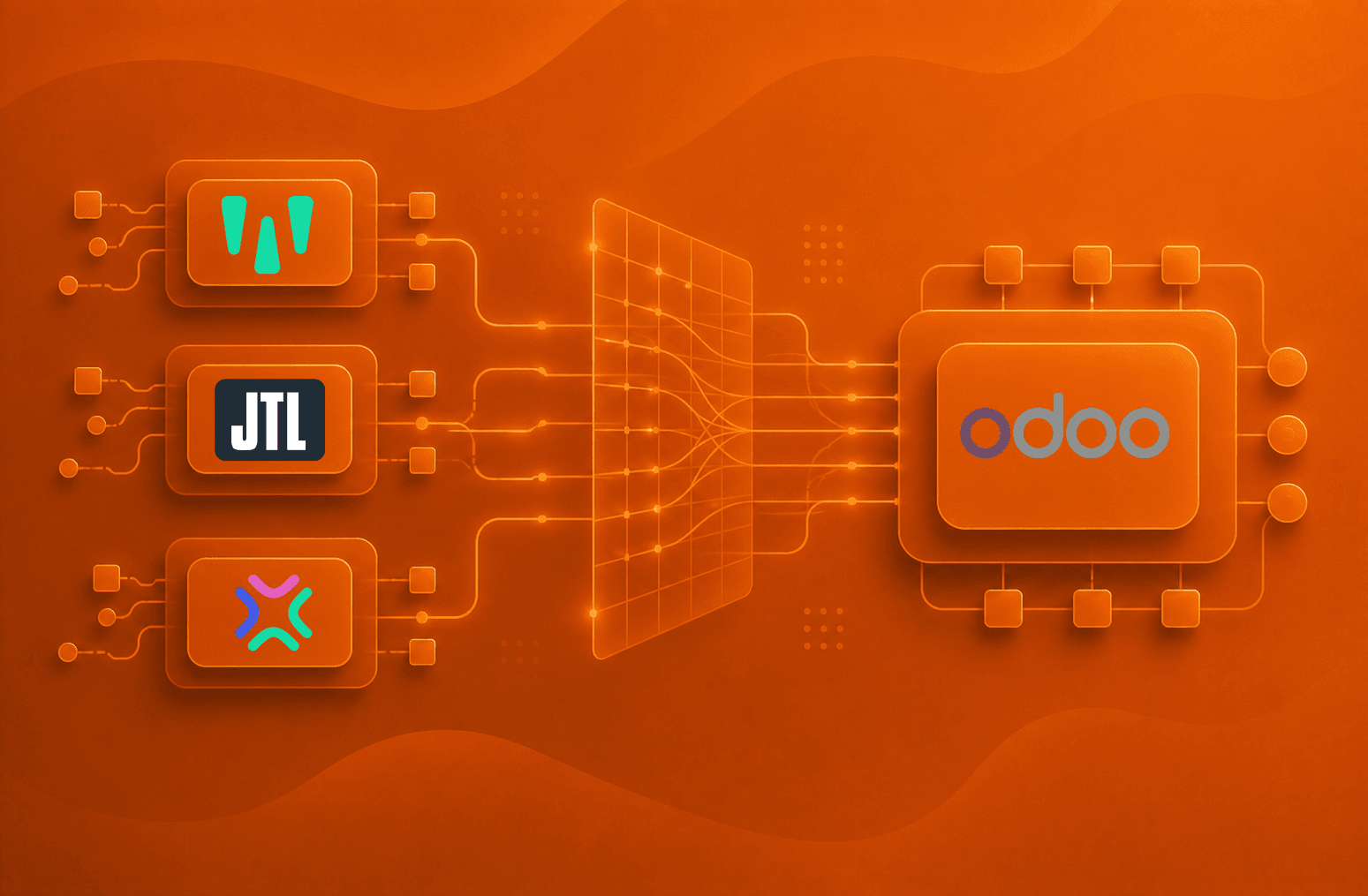
Switching ERP from weclapp, Xentral or JTL to Odoo: How companies migrate cleanly (process, risks and common mistakes)

ERP Implementation: 7 Risks That Make Projects Fail (and How to Spot Them Early)

Best-of-Breed vs. Best-of-Suite in Mid-Market: HubSpot vs. Odoo in a Reality Check

Controlling ERP in E-Commerce: How to Scale Without Losing Financial Control

Customer Service ERP: How to Integrate Service, ERP and Logistics Properly

E-Commerce Accounting ERP: When 60,000 Monthly Bookings Break Your System

E-Commerce Logistics & ERP: Why Fulfillment Becomes Structural at Scale
Made with🫀in Berlin © 2026 bobco GmbH
Made with🫀in Berlin © 2026 bobco GmbH
Made with🫀in Berlin © 2026 bobco GmbH