12 E-Commerce operators share how they scale operations. → Get the ERP Playbook.
E-Commerce Inventory Planning: Why It Breaks at €20M and How to Fix It
E-Commerce Inventory Planning: Why It Breaks at €20M and How to Fix It


When spreadsheet chaos turns into a structured process: setting up inventory planning the right way in e-commerce
Full warehouses and still stock-outs. And no one knows why.
“The obvious one is stock-outs. And especially: ‘I can’t explain how we went stock-out.’ That’s actually the real symptom.”
That’s how Leon Hergert describes the most common problem growing e-commerce brands bring to him. Leon knows these patterns well. From spare-part optimization at Lufthansa Technik to Hive Fulfillment and the founding of Spherecast — a Y Combinator alumni startup that now supports D2C brands in omnichannel growth — he has seen companies between €20 and €100 million repeatedly fail at the same points: raw materials, batching, multi-channel complexity.
And it almost always starts the same way: with spreadsheets that stopped reflecting reality a long time ago.
When Growth Becomes a Trap
Picture this: your shop is performing well, revenues are rising, you’re expanding into new channels. Suddenly you’re operating three or more warehouses, facing different requirements per channel — and your team? It scales linearly, “with spreadsheets and people,” as Leon aptly puts it.
The result: inexplicable stock-outs despite high inventory levels. Painful capital lock-up. Missed revenue that hurts. And worst of all? You have no visibility. You can’t make strategic decisions. You’re flying blind.
Change usually comes too late:
“These topics are addressed too late. And when I say too late, something has usually already happened. For example, inventory expired — and only then do people ask: Why?”
Sound familiar? Then this article is for you.
When spreadsheet chaos turns into a structured process: setting up inventory planning the right way in e-commerce
Full warehouses and still stock-outs. And no one knows why.
“The obvious one is stock-outs. And especially: ‘I can’t explain how we went stock-out.’ That’s actually the real symptom.”
That’s how Leon Hergert describes the most common problem growing e-commerce brands bring to him. Leon knows these patterns well. From spare-part optimization at Lufthansa Technik to Hive Fulfillment and the founding of Spherecast — a Y Combinator alumni startup that now supports D2C brands in omnichannel growth — he has seen companies between €20 and €100 million repeatedly fail at the same points: raw materials, batching, multi-channel complexity.
And it almost always starts the same way: with spreadsheets that stopped reflecting reality a long time ago.
When Growth Becomes a Trap
Picture this: your shop is performing well, revenues are rising, you’re expanding into new channels. Suddenly you’re operating three or more warehouses, facing different requirements per channel — and your team? It scales linearly, “with spreadsheets and people,” as Leon aptly puts it.
The result: inexplicable stock-outs despite high inventory levels. Painful capital lock-up. Missed revenue that hurts. And worst of all? You have no visibility. You can’t make strategic decisions. You’re flying blind.
Change usually comes too late:
“These topics are addressed too late. And when I say too late, something has usually already happened. For example, inventory expired — and only then do people ask: Why?”
Sound familiar? Then this article is for you.
Hol dir das E-Commerce-ERP-Playbook
Hol dir das E-Commerce-ERP-Playbook
Ein strukturierter Leitfaden für die wichtigsten ERP-Entscheidung im wachsenden E-Commerce (+60 Seiten, 12 Expertinnen).
Ein strukturierter Leitfaden für die wichtigsten ERP-Entscheidung im wachsenden E-Commerce (+60 Seiten, 12 Expertinnen).
Mit Erfahrungen von Expert*innen, die täglich ERP, Ops & Zahlen verantworten.
Hol dir das E-Commerce-ERP-Playbook
Ein strukturierter Leitfaden für die wichtigsten ERP-Entscheidung im wachsenden E-Commerce (+60 Seiten, 12 Expertinnen).
Mit Erfahrungen von Expert*innen, die täglich ERP, Ops & Zahlen verantworten.
The Radical Approach: Data First, Features Never
Leon’s core thesis is simple but fundamental:
“I need a single source of truth for data. If I don’t have that, there’s nothing to optimize.”
Here’s the mindset shift: instead of viewing operations as a cost center, you must see it as a value driver. That means proactive planning instead of reactive firefighting. Success comes from integrated processes, not isolated tool features.
“The awareness that Ops is a value driver is extremely important. I think that gets forgotten quickly — especially given the nature of classic D2C marketing and its philosophy.”
From Chaos to Control in Three Phases
The Foundation: Data (Non-Negotiable)
First, you need an ERP system as the foundation of your inventory management. There’s no way around it. Your data quality must be solid: sales, stock levels, purchase orders, transfer orders — everything must be captured cleanly.
Also check your fulfillment integration.
“We often noticed that people only use these tools partially.”
Sound familiar?
The Framework: Implement S&OP Processes
“Sales & Operations Planning. What does that mean? You define structured processes that run in a specific cycle — usually monthly.”
Concretely:
Assortment Planning – What do we launch? What gets discontinued?
Demand Forecasting – What will we sell?
Consensus Building – Incorporate sales team input
Supply Planning – Plan POs and transfers
Executive Review – Identify and close gaps
Sounds like work? It is. But you already know the alternative:
“Or we do nothing. And doing nothing often means: Okay, we’re low on stock — quickly place an order somehow.”
The Roof: Optimization & Automation
Here’s where it gets interesting:
“We believe an Ops team can function very lean: a small, strong team that scales through tools — instead of simply adding people who react to supplier inquiries.”
That’s the future. Not more people — smarter processes.
The Measurable Impact: Numbers That Matter
The KPIs that count:
Inventory Value down → less capital tied up
Stock-out Rate minimized → fewer lost sales
Inventory Turnover improved → lower capital lock-up, lower storage costs
Expiry Risk controlled (for perishables) → fewer write-offs
And the timeline?
Under €20M revenue → focus on data quality
€20–50M → establish S&OP processes
€50M+ → automation and optimization
When does the turning point come?
“When I’m no longer firefighting with POs but can think strategically: How do I batch my POs across different manufacturers or raw materials to fill trucks efficiently?”
Suddenly you’re not just saving time — you’re saving real cash.
The Radical Approach: Data First, Features Never
Leon’s core thesis is simple but fundamental:
“I need a single source of truth for data. If I don’t have that, there’s nothing to optimize.”
Here’s the mindset shift: instead of viewing operations as a cost center, you must see it as a value driver. That means proactive planning instead of reactive firefighting. Success comes from integrated processes, not isolated tool features.
“The awareness that Ops is a value driver is extremely important. I think that gets forgotten quickly — especially given the nature of classic D2C marketing and its philosophy.”
From Chaos to Control in Three Phases
The Foundation: Data (Non-Negotiable)
First, you need an ERP system as the foundation of your inventory management. There’s no way around it. Your data quality must be solid: sales, stock levels, purchase orders, transfer orders — everything must be captured cleanly.
Also check your fulfillment integration.
“We often noticed that people only use these tools partially.”
Sound familiar?
The Framework: Implement S&OP Processes
“Sales & Operations Planning. What does that mean? You define structured processes that run in a specific cycle — usually monthly.”
Concretely:
Assortment Planning – What do we launch? What gets discontinued?
Demand Forecasting – What will we sell?
Consensus Building – Incorporate sales team input
Supply Planning – Plan POs and transfers
Executive Review – Identify and close gaps
Sounds like work? It is. But you already know the alternative:
“Or we do nothing. And doing nothing often means: Okay, we’re low on stock — quickly place an order somehow.”
The Roof: Optimization & Automation
Here’s where it gets interesting:
“We believe an Ops team can function very lean: a small, strong team that scales through tools — instead of simply adding people who react to supplier inquiries.”
That’s the future. Not more people — smarter processes.
The Measurable Impact: Numbers That Matter
The KPIs that count:
Inventory Value down → less capital tied up
Stock-out Rate minimized → fewer lost sales
Inventory Turnover improved → lower capital lock-up, lower storage costs
Expiry Risk controlled (for perishables) → fewer write-offs
And the timeline?
Under €20M revenue → focus on data quality
€20–50M → establish S&OP processes
€50M+ → automation and optimization
When does the turning point come?
“When I’m no longer firefighting with POs but can think strategically: How do I batch my POs across different manufacturers or raw materials to fill trucks efficiently?”
Suddenly you’re not just saving time — you’re saving real cash.
Hol dir das E-Commerce-ERP-Playbook
Ein strukturierter Leitfaden für die wichtigsten ERP-Entscheidung im wachsenden E-Commerce (+60 Seiten, 12 Expertinnen).
Mit Erfahrungen von Expert*innen, die täglich ERP, Ops & Zahlen verantworten.
Leon’s Three Golden Learnings
Learning #1: Timing Is Everything
Don’t wait for a crisis. It becomes relevant at €20–25M revenue — but starting earlier is never a mistake.
Learning #2: Operations Drives Profitability
Lower safety stock means more cash. Optimized batching reduces cost per unit. It’s not rocket science — but many forget it.
Learning #3: Lean Teams + the Right Tools Beat Large Teams + Spreadsheets
Always. No one likes to hear it, but the firefighting mentality — reactive instead of proactive — has to die.
Your Takeaway Toolkit
Watch out for:
Switching ERP systems during scaling (don’t do it)
Arbitrary instead of dynamic safety stock
Relying solely on moving averages as a forecasting method in e-commerce
Best-practice benchmarks: Look at YFood and HOLY. They’ve understood it. And if you’re unsure whether a solution like Spherecast is right for you? Run a sandbox test for proof of value.
The Bottom Line
Inventory planning, procurement, supply planning — not exactly sexy topics.
But you know what is?
Profitability. Scalability. An ops team that doesn’t need to double in size every year.
If you’re at €20M+ in revenue and still juggling spreadsheets, it’s time to rethink.
FAQs
1. Why Does Inventory Planning Become More Difficult with Growth?
Inventory planning becomes harder because complexity increases exponentially, not linearly. One channel with one warehouse is manageable. Three channels with multiple warehouses, varying lead times, and channel-specific requirements are not.
What many underestimate: the problem is rarely just volume — it’s the growing number of dependencies. Each new channel, supplier, and warehouse creates additional decision points that spreadsheets simply can’t model anymore.
If you use the same processes at higher revenue levels as you did at the beginning, you won’t get the same results — you’ll get worse ones, because error sources multiply.
2. What Role Does ERP Play in Forecasting?
ERP plays a more fundamental role in forecasting than many assume. It doesn’t generate the forecast itself — but it provides the data foundation without which any forecast is speculation.
Sales data, purchase orders, inventory levels, transfer orders — all must be captured cleanly and consistently before forecasting even begins.
The common mistake: teams invest in forecasting methods while their data foundation is incomplete.
An ERP is not a planning tool — but it is the single source of truth on which every serious planning process depends. Without that foundation, you’re optimizing in the dark.
3. Why Are Manual Forecasts Risky?
Manual forecasting isn’t risky because humans estimate poorly — it’s risky because manual processes lack consistency.
Relying on gut feeling or simple moving averages systematically overlooks patterns: seasonality, channel effects, promotions.
The bigger risk lies in what’s invisible: manual forecasts are rarely reviewed in a structured way. Without a feedback loop between forecast and reality, teams repeat the same misjudgments without realizing it.
The danger isn’t one wrong forecast — it’s a planning process that doesn’t learn.
4. What Data Is Required for Reliable Forecasting?
The question sounds simple — but the answer depends on your business model.
At minimum, you need historical sales data, current inventory levels, and open purchase orders.
But for businesses with raw materials, batching, or multiple channels, that’s not enough. You also need production cycles, supplier lead times, minimum order quantities, and channel-specific demand patterns.
The decisive factor is not the quantity of data — but its quality and integration. Isolated data silos — sales here, inventory there, procurement somewhere else — create blind spots, even if each dataset is accurate on its own.
5. What Are the Most Common Problems in Inventory Planning — and How Do I Solve Them?
The most common issues are less operational than structural.
Stock-outs despite high inventory indicate poor allocation, not insufficient stock.
High capital lock-up often stems from flat safety stock levels instead of dynamic calculations.
Expired goods are usually a symptom of missing visibility, not inaccurate demand forecasts.
The common denominator: it’s not a lack of inventory or budget — it’s the absence of an integrated planning process connecting procurement, inventory, and sales.
If you fight symptoms in isolation, you rarely solve the root cause — you just shift the problem elsewhere.
Leon’s Three Golden Learnings
Learning #1: Timing Is Everything
Don’t wait for a crisis. It becomes relevant at €20–25M revenue — but starting earlier is never a mistake.
Learning #2: Operations Drives Profitability
Lower safety stock means more cash. Optimized batching reduces cost per unit. It’s not rocket science — but many forget it.
Learning #3: Lean Teams + the Right Tools Beat Large Teams + Spreadsheets
Always. No one likes to hear it, but the firefighting mentality — reactive instead of proactive — has to die.
Your Takeaway Toolkit
Watch out for:
Switching ERP systems during scaling (don’t do it)
Arbitrary instead of dynamic safety stock
Relying solely on moving averages as a forecasting method in e-commerce
Best-practice benchmarks: Look at YFood and HOLY. They’ve understood it. And if you’re unsure whether a solution like Spherecast is right for you? Run a sandbox test for proof of value.
The Bottom Line
Inventory planning, procurement, supply planning — not exactly sexy topics.
But you know what is?
Profitability. Scalability. An ops team that doesn’t need to double in size every year.
If you’re at €20M+ in revenue and still juggling spreadsheets, it’s time to rethink.
FAQs
1. Why Does Inventory Planning Become More Difficult with Growth?
Inventory planning becomes harder because complexity increases exponentially, not linearly. One channel with one warehouse is manageable. Three channels with multiple warehouses, varying lead times, and channel-specific requirements are not.
What many underestimate: the problem is rarely just volume — it’s the growing number of dependencies. Each new channel, supplier, and warehouse creates additional decision points that spreadsheets simply can’t model anymore.
If you use the same processes at higher revenue levels as you did at the beginning, you won’t get the same results — you’ll get worse ones, because error sources multiply.
2. What Role Does ERP Play in Forecasting?
ERP plays a more fundamental role in forecasting than many assume. It doesn’t generate the forecast itself — but it provides the data foundation without which any forecast is speculation.
Sales data, purchase orders, inventory levels, transfer orders — all must be captured cleanly and consistently before forecasting even begins.
The common mistake: teams invest in forecasting methods while their data foundation is incomplete.
An ERP is not a planning tool — but it is the single source of truth on which every serious planning process depends. Without that foundation, you’re optimizing in the dark.
3. Why Are Manual Forecasts Risky?
Manual forecasting isn’t risky because humans estimate poorly — it’s risky because manual processes lack consistency.
Relying on gut feeling or simple moving averages systematically overlooks patterns: seasonality, channel effects, promotions.
The bigger risk lies in what’s invisible: manual forecasts are rarely reviewed in a structured way. Without a feedback loop between forecast and reality, teams repeat the same misjudgments without realizing it.
The danger isn’t one wrong forecast — it’s a planning process that doesn’t learn.
4. What Data Is Required for Reliable Forecasting?
The question sounds simple — but the answer depends on your business model.
At minimum, you need historical sales data, current inventory levels, and open purchase orders.
But for businesses with raw materials, batching, or multiple channels, that’s not enough. You also need production cycles, supplier lead times, minimum order quantities, and channel-specific demand patterns.
The decisive factor is not the quantity of data — but its quality and integration. Isolated data silos — sales here, inventory there, procurement somewhere else — create blind spots, even if each dataset is accurate on its own.
5. What Are the Most Common Problems in Inventory Planning — and How Do I Solve Them?
The most common issues are less operational than structural.
Stock-outs despite high inventory indicate poor allocation, not insufficient stock.
High capital lock-up often stems from flat safety stock levels instead of dynamic calculations.
Expired goods are usually a symptom of missing visibility, not inaccurate demand forecasts.
The common denominator: it’s not a lack of inventory or budget — it’s the absence of an integrated planning process connecting procurement, inventory, and sales.
If you fight symptoms in isolation, you rarely solve the root cause — you just shift the problem elsewhere.
More articles

How to Start an ERP Project Successfully: 9 Decisions That Need to Be Made Before Implementation
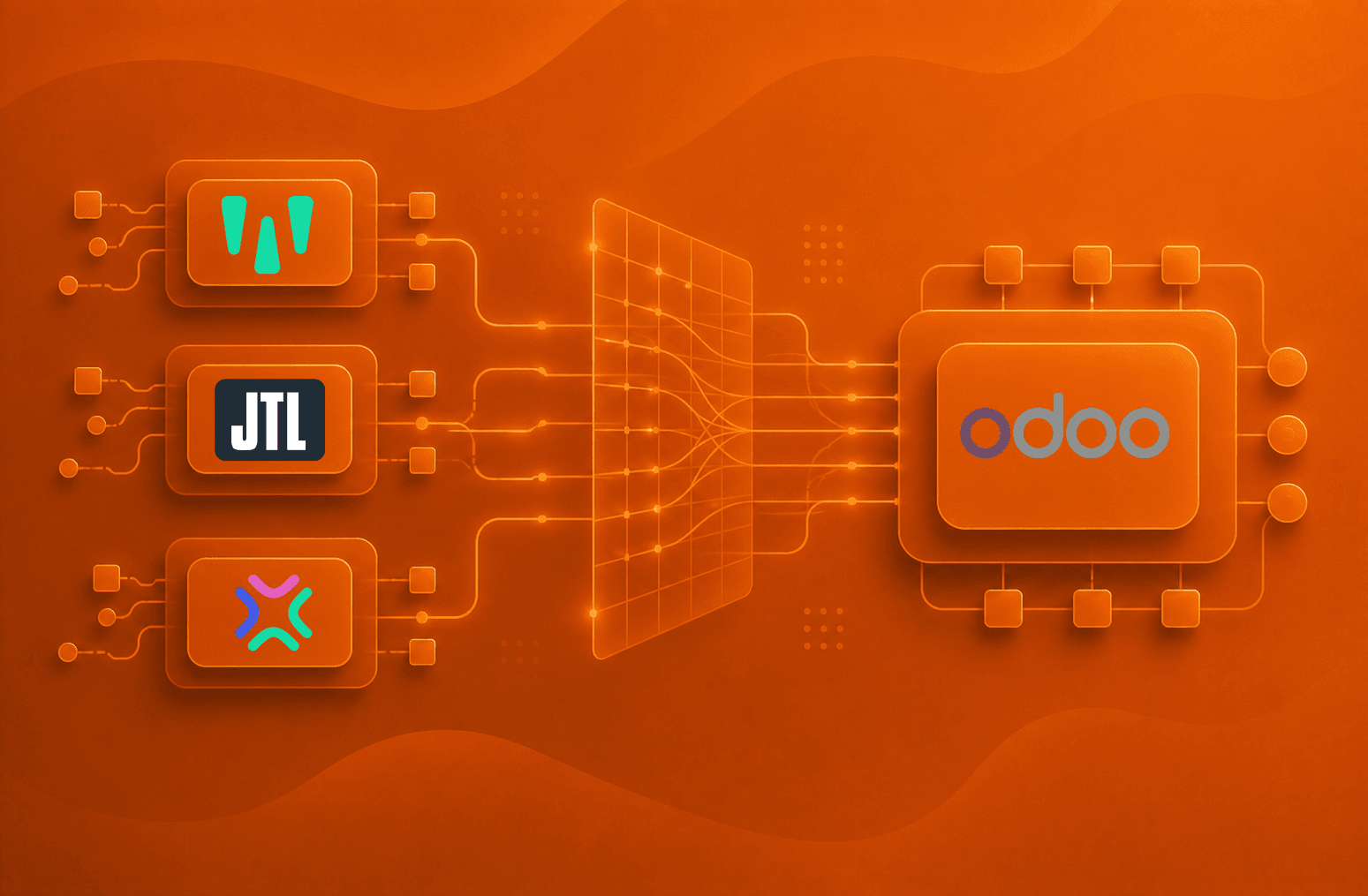
Switching ERP from weclapp, Xentral or JTL to Odoo: How companies migrate cleanly (process, risks and common mistakes)

ERP Implementation: 7 Risks That Make Projects Fail (and How to Spot Them Early)

Best-of-Breed vs. Best-of-Suite in Mid-Market: HubSpot vs. Odoo in a Reality Check

Controlling ERP in E-Commerce: How to Scale Without Losing Financial Control

Customer Service ERP: How to Integrate Service, ERP and Logistics Properly

E-Commerce Accounting ERP: When 60,000 Monthly Bookings Break Your System

E-Commerce Logistics & ERP: Why Fulfillment Becomes Structural at Scale
Made with🫀in Berlin © 2026 bobco GmbH
Made with🫀in Berlin © 2026 bobco GmbH
Made with🫀in Berlin © 2026 bobco GmbH