12 E-Commerce operators share how they scale operations. → Get the ERP Playbook.
ERP Strategy in E-Commerce: When to Integrate? And When to Stay Autonomous?
ERP Strategy in E-Commerce: When to Integrate? And When to Stay Autonomous?


In e-commerce, the right ERP strategy determines whether a company scales — or stalls. Choosing the right system is rarely straightforward. In fact, contrary to expectations, the system itself is often not the central issue in ERP consulting. The spotlight belongs somewhere else entirely:
“People are the reason I want to throw it all away every year,” Dörte says with a laugh - only half joking.
Dörte Kaschdailis has had a remarkable journey: from Hermes (no, not the blue one, the long-forgotten green brand) to Planet Sports, and finally to her own consultancy, opexxia. For nearly ten years now, she has been helping companies tackle one of the toughest questions there is:
Do we need an ERP? And if so, which one?
The €20 Million Wall: When Vision Meets Chaos
“My rule of thumb is: once you hit €20 million in revenue, you have to start dealing with this topic,” Dörte states plainly. In her experience, this is where complexity in e-commerce often explodes. Companies want to internationalize, open new channels (D2C, marketplaces, wholesale), and systematically build their existing customer base.
This is where it often happens: the fatal gap between vision and processes.
So which is it — €5 million, €50 million, or €100 million? Depending on the business model and prior experience, ERP readiness can kick in at very different thresholds. In the end, what matters most is the complexity of your operations.
How complex are your products and the processes behind them?
Do you run your own warehouse and operations?
How much internal expertise and capacity does your team actually have?
“As complexity increases, the question inevitably arises: do I have a central system? At that point, I have to face that complexity head-on and try to control it.”
That’s the moment when companies without a system start to tangle themselves up, as Dörte puts it. In her experience, the concept collapses entirely by the time companies reach €40 million in revenue.
People Over Machines
Forget everything you’ve heard about ERP selection. Dörte’s approach is radically different:
“I always say: implementation partner first, system second because beyond a certain size, the systems themselves no longer differ fundamentally.”
That whole “let’s reduce complexity” mindset — the idea of streamlined processes and simplification? Bullshit, says Dörte. Your environment is not going to get simpler. You have to learn to manage complexity rather than wish it away.
The biggest challenge is human:
“I need people in every department who are capable of understanding where data flows from and to, and how processes run end-to-end.”
Most companies have serious blind spots here. They think in silos, not in processes. Unvarnished truth:
“This is the single biggest growth bottleneck.”
In e-commerce, the right ERP strategy determines whether a company scales — or stalls. Choosing the right system is rarely straightforward. In fact, contrary to expectations, the system itself is often not the central issue in ERP consulting. The spotlight belongs somewhere else entirely:
“People are the reason I want to throw it all away every year,” Dörte says with a laugh - only half joking.
Dörte Kaschdailis has had a remarkable journey: from Hermes (no, not the blue one, the long-forgotten green brand) to Planet Sports, and finally to her own consultancy, opexxia. For nearly ten years now, she has been helping companies tackle one of the toughest questions there is:
Do we need an ERP? And if so, which one?
The €20 Million Wall: When Vision Meets Chaos
“My rule of thumb is: once you hit €20 million in revenue, you have to start dealing with this topic,” Dörte states plainly. In her experience, this is where complexity in e-commerce often explodes. Companies want to internationalize, open new channels (D2C, marketplaces, wholesale), and systematically build their existing customer base.
This is where it often happens: the fatal gap between vision and processes.
So which is it — €5 million, €50 million, or €100 million? Depending on the business model and prior experience, ERP readiness can kick in at very different thresholds. In the end, what matters most is the complexity of your operations.
How complex are your products and the processes behind them?
Do you run your own warehouse and operations?
How much internal expertise and capacity does your team actually have?
“As complexity increases, the question inevitably arises: do I have a central system? At that point, I have to face that complexity head-on and try to control it.”
That’s the moment when companies without a system start to tangle themselves up, as Dörte puts it. In her experience, the concept collapses entirely by the time companies reach €40 million in revenue.
People Over Machines
Forget everything you’ve heard about ERP selection. Dörte’s approach is radically different:
“I always say: implementation partner first, system second because beyond a certain size, the systems themselves no longer differ fundamentally.”
That whole “let’s reduce complexity” mindset — the idea of streamlined processes and simplification? Bullshit, says Dörte. Your environment is not going to get simpler. You have to learn to manage complexity rather than wish it away.
The biggest challenge is human:
“I need people in every department who are capable of understanding where data flows from and to, and how processes run end-to-end.”
Most companies have serious blind spots here. They think in silos, not in processes. Unvarnished truth:
“This is the single biggest growth bottleneck.”
Hol dir das E-Commerce-ERP-Playbook
Hol dir das E-Commerce-ERP-Playbook
Ein strukturierter Leitfaden für die wichtigsten ERP-Entscheidung im wachsenden E-Commerce (+60 Seiten, 12 Expertinnen).
Ein strukturierter Leitfaden für die wichtigsten ERP-Entscheidung im wachsenden E-Commerce (+60 Seiten, 12 Expertinnen).
Mit Erfahrungen von Expert*innen, die täglich ERP, Ops & Zahlen verantworten.
Hol dir das E-Commerce-ERP-Playbook
Ein strukturierter Leitfaden für die wichtigsten ERP-Entscheidung im wachsenden E-Commerce (+60 Seiten, 12 Expertinnen).
Mit Erfahrungen von Expert*innen, die täglich ERP, Ops & Zahlen verantworten.
From DNA Documentation to ERP: How to Do It Right
Phase 1: The Reality Check
Start with a two-day workshop. Bring together the strongest people from all departments. Walk through Order-to-Cash and Purchase-to-Pay. Identify the main pain points.
Dörte issues a warning: a CEO’s perception of who their “best people” are does not always align with reality.
Phase 2: The Functional Concept
Write down what your business model is today, and what it needs to be tomorrow. Five pages are enough. This becomes your DNA documentation.
Without it, you’re buying a system blind, one that likely won’t fit your business two years from now.
Create use cases for every department and visualize your processes using tools like Lucidchart.
Phase 3: The Selection
Run reference calls with existing customers of the vendor, and with real users of the system. Organize demo workshops.
Then comes Dörte’s secret weapon:
“We want everyone to participate in these demo workshops, and every identified group fills out a scoring matrix individually, in silence, for themselves.”
When it comes to ERP selection in e-commerce, this rule applies:
No single-executive decisions. No “they took me out for a nice Japanese dinner” deals.
A collective decision, or no decision at all.
The Hard Truth About ROI
“Calculating ROI for ERP is incredibly difficult. In reality, the project budget needs to be evaluated in relation to revenue over the next five years.”
Rule of Thumb: Percentage of Revenue
A proven heuristic for cost estimation: ERP project costs typically range between 0.25% and 4% of annual revenue, depending on company size, complexity, and implementation approach.
For well-managed projects, the combined average should land around 1% of revenue.
Licensing fees are often the smallest line item. The real costs come from project organization, data migration, change management, integrations, and testing. Most underestimated of all: internal staffing requirements and the time your team needs for coordination, training, and adoption.
(Source: TurningPoint Consulting, 2024 ERP Selection, Costs and Outcomes Guide)
Project duration: 1–2 years
Expected usage: officially 5–7 years, realistically closer to 7–10 — because hardly anyone dares to touch it again.
This is an investment in your future — not your current state. If you don’t truly believe in your growth, keep your hands off ERP.
Dörte’s Top 3 Recommendations
“First: hire a neutral advisor.” An external perspective is irreplaceable. Internal blinders distort reality.
“Second: define your core growth drivers for the next five years.” Many companies can’t name five. Hard truth: without this clarity, no ERP decision can be sound. If you don’t know where you’re headed, you’re buying a ticket to nowhere.
“Third: build a team that learns alongside the project.” Invest in parallel skill development for your employees. In the end, this matters more than the system itself.
From DNA Documentation to ERP: How to Do It Right
Phase 1: The Reality Check
Start with a two-day workshop. Bring together the strongest people from all departments. Walk through Order-to-Cash and Purchase-to-Pay. Identify the main pain points.
Dörte issues a warning: a CEO’s perception of who their “best people” are does not always align with reality.
Phase 2: The Functional Concept
Write down what your business model is today, and what it needs to be tomorrow. Five pages are enough. This becomes your DNA documentation.
Without it, you’re buying a system blind, one that likely won’t fit your business two years from now.
Create use cases for every department and visualize your processes using tools like Lucidchart.
Phase 3: The Selection
Run reference calls with existing customers of the vendor, and with real users of the system. Organize demo workshops.
Then comes Dörte’s secret weapon:
“We want everyone to participate in these demo workshops, and every identified group fills out a scoring matrix individually, in silence, for themselves.”
When it comes to ERP selection in e-commerce, this rule applies:
No single-executive decisions. No “they took me out for a nice Japanese dinner” deals.
A collective decision, or no decision at all.
The Hard Truth About ROI
“Calculating ROI for ERP is incredibly difficult. In reality, the project budget needs to be evaluated in relation to revenue over the next five years.”
Rule of Thumb: Percentage of Revenue
A proven heuristic for cost estimation: ERP project costs typically range between 0.25% and 4% of annual revenue, depending on company size, complexity, and implementation approach.
For well-managed projects, the combined average should land around 1% of revenue.
Licensing fees are often the smallest line item. The real costs come from project organization, data migration, change management, integrations, and testing. Most underestimated of all: internal staffing requirements and the time your team needs for coordination, training, and adoption.
(Source: TurningPoint Consulting, 2024 ERP Selection, Costs and Outcomes Guide)
Project duration: 1–2 years
Expected usage: officially 5–7 years, realistically closer to 7–10 — because hardly anyone dares to touch it again.
This is an investment in your future — not your current state. If you don’t truly believe in your growth, keep your hands off ERP.
Dörte’s Top 3 Recommendations
“First: hire a neutral advisor.” An external perspective is irreplaceable. Internal blinders distort reality.
“Second: define your core growth drivers for the next five years.” Many companies can’t name five. Hard truth: without this clarity, no ERP decision can be sound. If you don’t know where you’re headed, you’re buying a ticket to nowhere.
“Third: build a team that learns alongside the project.” Invest in parallel skill development for your employees. In the end, this matters more than the system itself.
Hol dir das E-Commerce-ERP-Playbook
Ein strukturierter Leitfaden für die wichtigsten ERP-Entscheidung im wachsenden E-Commerce (+60 Seiten, 12 Expertinnen).
Mit Erfahrungen von Expert*innen, die täglich ERP, Ops & Zahlen verantworten.
The Elephant in the Room: Master Data
One final topic where Dörte nearly loses her composure: master data quality.
“It’s awful. Everywhere.”
From day one, you must invest in clean product data. The most elegant ERP implementation will fail on chaotic master data. Migrating it…
“…that’s where all the grey hair comes from.”
More on this in our blog post on Product Data with Norbert Weckerle.
The Bottom Line
ERP is not an IT project. It is an organizational development project supported by IT.
Anyone who fails to internalize this should invest their money elsewhere.
But when approached correctly, ERP creates the foundation for sustainable, profitable growth.
This is an investment in your future.
FAQs
1. When is an e-commerce company truly ready for an ERP?
The question of timing is often framed incorrectly. It’s less about a magic revenue threshold and more about the level of complexity a company has reached — or is about to reach. International expansion, multiple sales channels, or a systematic focus on existing customers all introduce complexity that spreadsheets and workarounds can no longer handle.
True readiness shows in whether a company can think through its own processes end-to-end — from customer order to payment, from purchasing to warehousing. Without this shared understanding, any system remains an expensive shell.
2. Implement ERP now or wait: how do you recognize the right moment?
The right moment is rarely obvious, but warning signs exist: departments working against each other because information doesn’t flow; the same data maintained across five tools; decisions driven by gut feeling instead of reliable numbers.
Many companies wait until chaos is undeniable. Then pressure is high and the time for proper implementation is scarce. But introducing ERP too early carries its own risk: buying a system that no longer fits the business model two years later.
The honest question is: do you know where your company wants to be in five years?
3. Which ERP prerequisites are most often missing without companies realizing it?
The most underestimated prerequisite is human, not technical: people who understand processes across departmental boundaries. Many teams operate in silos: purchasing, warehouse, sales, and finance, working alongside each other instead of together.
Also widely underestimated: master data quality. Product data that has grown organically over years becomes a nightmare during migration.
And finally: many companies lack a documented DNA, a short, clear description of what the business is today and what it aims to become tomorrow.
4. What are the most common mistakes in ERP selection?
One of the most frequent mistakes is focusing on the system instead of the people implementing it. Beyond a certain size, ERP systems are largely comparable, but implementation partners are not.
Equally problematic: decisions made by individual executives without involving future users. What sounds convincing in a sales pitch often collapses under real operational conditions.
Another false hope is that a new system will automatically reduce complexity. Software doesn’t remove complexity, it helps manage it.
5. Why do ERP projects fail despite good software?
ERP projects rarely fail because of the software. They fail because companies treat them as IT projects instead of organizational development initiatives.
ERP forces organizations to confront how they actually work, and that creates resistance. If employees aren’t involved from the start, if real change management isn’t planned, if internal capacity is underestimated, even the best system cannot compensate.
The technology usually works. The people expected to work with it were often forgotten.
The Elephant in the Room: Master Data
One final topic where Dörte nearly loses her composure: master data quality.
“It’s awful. Everywhere.”
From day one, you must invest in clean product data. The most elegant ERP implementation will fail on chaotic master data. Migrating it…
“…that’s where all the grey hair comes from.”
More on this in our blog post on Product Data with Norbert Weckerle.
The Bottom Line
ERP is not an IT project. It is an organizational development project supported by IT.
Anyone who fails to internalize this should invest their money elsewhere.
But when approached correctly, ERP creates the foundation for sustainable, profitable growth.
This is an investment in your future.
FAQs
1. When is an e-commerce company truly ready for an ERP?
The question of timing is often framed incorrectly. It’s less about a magic revenue threshold and more about the level of complexity a company has reached — or is about to reach. International expansion, multiple sales channels, or a systematic focus on existing customers all introduce complexity that spreadsheets and workarounds can no longer handle.
True readiness shows in whether a company can think through its own processes end-to-end — from customer order to payment, from purchasing to warehousing. Without this shared understanding, any system remains an expensive shell.
2. Implement ERP now or wait: how do you recognize the right moment?
The right moment is rarely obvious, but warning signs exist: departments working against each other because information doesn’t flow; the same data maintained across five tools; decisions driven by gut feeling instead of reliable numbers.
Many companies wait until chaos is undeniable. Then pressure is high and the time for proper implementation is scarce. But introducing ERP too early carries its own risk: buying a system that no longer fits the business model two years later.
The honest question is: do you know where your company wants to be in five years?
3. Which ERP prerequisites are most often missing without companies realizing it?
The most underestimated prerequisite is human, not technical: people who understand processes across departmental boundaries. Many teams operate in silos: purchasing, warehouse, sales, and finance, working alongside each other instead of together.
Also widely underestimated: master data quality. Product data that has grown organically over years becomes a nightmare during migration.
And finally: many companies lack a documented DNA, a short, clear description of what the business is today and what it aims to become tomorrow.
4. What are the most common mistakes in ERP selection?
One of the most frequent mistakes is focusing on the system instead of the people implementing it. Beyond a certain size, ERP systems are largely comparable, but implementation partners are not.
Equally problematic: decisions made by individual executives without involving future users. What sounds convincing in a sales pitch often collapses under real operational conditions.
Another false hope is that a new system will automatically reduce complexity. Software doesn’t remove complexity, it helps manage it.
5. Why do ERP projects fail despite good software?
ERP projects rarely fail because of the software. They fail because companies treat them as IT projects instead of organizational development initiatives.
ERP forces organizations to confront how they actually work, and that creates resistance. If employees aren’t involved from the start, if real change management isn’t planned, if internal capacity is underestimated, even the best system cannot compensate.
The technology usually works. The people expected to work with it were often forgotten.
More articles

How to Start an ERP Project Successfully: 9 Decisions That Need to Be Made Before Implementation
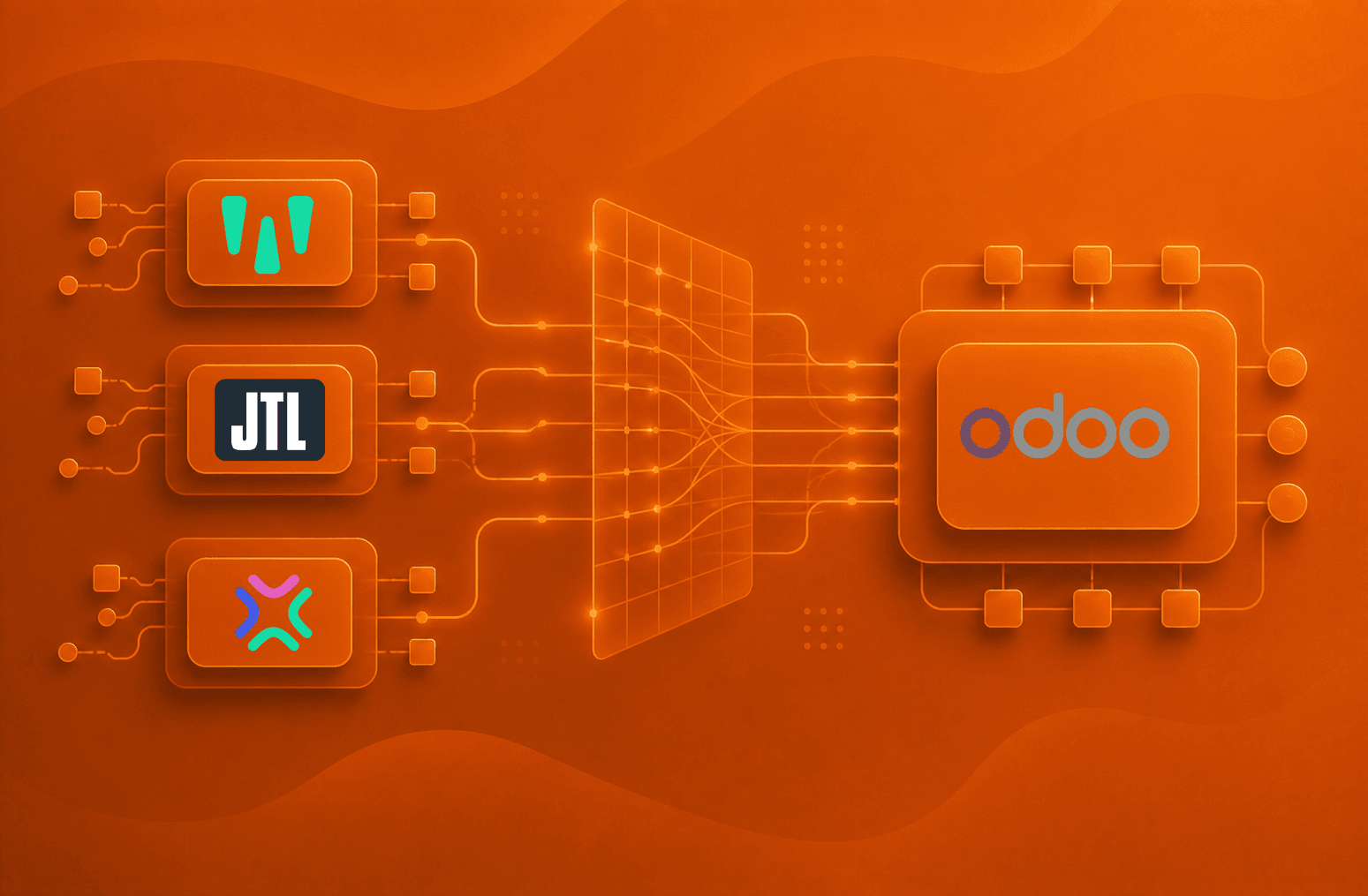
Switching ERP from weclapp, Xentral or JTL to Odoo: How companies migrate cleanly (process, risks and common mistakes)

ERP Implementation: 7 Risks That Make Projects Fail (and How to Spot Them Early)

Best-of-Breed vs. Best-of-Suite in Mid-Market: HubSpot vs. Odoo in a Reality Check

Controlling ERP in E-Commerce: How to Scale Without Losing Financial Control

Customer Service ERP: How to Integrate Service, ERP and Logistics Properly

E-Commerce Accounting ERP: When 60,000 Monthly Bookings Break Your System

E-Commerce Logistics & ERP: Why Fulfillment Becomes Structural at Scale

Made with🫀in Berlin © 2026 bobco GmbH
Made with🫀in Berlin © 2026 bobco GmbH
Made with🫀in Berlin © 2026 bobco GmbH