12 E-Commerce operators share how they scale operations. → Get the ERP Playbook.
Data-Driven Process Optimization in E-Commerce: From Gut Feeling to Operational Clarity
Data-Driven Process Optimization in E-Commerce: From Gut Feeling to Operational Clarity


When manual processes reach their limits
How long does an order take in your company from click to doorstep? If you have a number in mind right now: did you measure it, or estimate it? One company was certain: five days. The reality: nine. Almost twice as long. That raises questions: Are you even working on the right things? How is success measured? And why does it matter? Pete Clifford’s impression of the Managing Director: “I don’t think he had ever really thought about this topic before.”
Finding these gaps is Pete’s job. After 20 years in online grocery - 40,000 products, same-day delivery, three temperature zones - he knows where operational problems hide. As an expert in process optimization in e-commerce and a sharp-eyed challenger of business models, he asks the questions for bob that hurt and bring the focus back to what truly matters.
The Multi-Channel Trap Snaps Shut
“They were — often positively — encouraged to diversify their channels very, very quickly in the early years,” Pete says about the typical evolution of e-commerce. At the beginning, everything is easy: one webshop, a few orders, everything runs through Excel. Then Amazon is added. Then phone orders. Then email. Then international expansion. Suddenly, your team is juggling five channels with Google Sheets.
Operational bottlenecks in e-commerce often show up first in inventory. The focal point: “The place where I would normally see it when I walk in […] is inventory.”
The symptoms Pete repeatedly observes there: “Either the lack of visibility into inventory means products are too often out of stock, which impacts conversion rate and average order value — or products can be sold, but lead times extend.”
A situation with very real consequences: “The most common complaint is often: Where is my order (WISMO), or why is my order delayed? Sometimes 70, 80 percent of contacts relate to that.”
Knowing What You Measure
Pete’s philosophy is radically simple: “Let’s implement a very, very simple 60-degree view of the business with leading indicators that are reviewed weekly by senior management and that we talk about in terms of performance.” No fancy dashboards, no AI — first, understand what is really happening through data-driven process analysis.
The paradigm shift? Pete clearly distinguishes between lagging measures such as P&L figures (“you only find out when it’s too late to do anything about it”) and leading metrics that can be actively influenced.
Pete’s secret weapon: “Availability is what’s usually missing, and I always try to make sure it’s there first, because it drives almost everything. It drives website conversion, it drives average order value.”
When manual processes reach their limits
How long does an order take in your company from click to doorstep? If you have a number in mind right now: did you measure it, or estimate it? One company was certain: five days. The reality: nine. Almost twice as long. That raises questions: Are you even working on the right things? How is success measured? And why does it matter? Pete Clifford’s impression of the Managing Director: “I don’t think he had ever really thought about this topic before.”
Finding these gaps is Pete’s job. After 20 years in online grocery - 40,000 products, same-day delivery, three temperature zones - he knows where operational problems hide. As an expert in process optimization in e-commerce and a sharp-eyed challenger of business models, he asks the questions for bob that hurt and bring the focus back to what truly matters.
The Multi-Channel Trap Snaps Shut
“They were — often positively — encouraged to diversify their channels very, very quickly in the early years,” Pete says about the typical evolution of e-commerce. At the beginning, everything is easy: one webshop, a few orders, everything runs through Excel. Then Amazon is added. Then phone orders. Then email. Then international expansion. Suddenly, your team is juggling five channels with Google Sheets.
Operational bottlenecks in e-commerce often show up first in inventory. The focal point: “The place where I would normally see it when I walk in […] is inventory.”
The symptoms Pete repeatedly observes there: “Either the lack of visibility into inventory means products are too often out of stock, which impacts conversion rate and average order value — or products can be sold, but lead times extend.”
A situation with very real consequences: “The most common complaint is often: Where is my order (WISMO), or why is my order delayed? Sometimes 70, 80 percent of contacts relate to that.”
Knowing What You Measure
Pete’s philosophy is radically simple: “Let’s implement a very, very simple 60-degree view of the business with leading indicators that are reviewed weekly by senior management and that we talk about in terms of performance.” No fancy dashboards, no AI — first, understand what is really happening through data-driven process analysis.
The paradigm shift? Pete clearly distinguishes between lagging measures such as P&L figures (“you only find out when it’s too late to do anything about it”) and leading metrics that can be actively influenced.
Pete’s secret weapon: “Availability is what’s usually missing, and I always try to make sure it’s there first, because it drives almost everything. It drives website conversion, it drives average order value.”
Hol dir das E-Commerce-ERP-Playbook
Hol dir das E-Commerce-ERP-Playbook
Ein strukturierter Leitfaden für die wichtigsten ERP-Entscheidung im wachsenden E-Commerce (+60 Seiten, 12 Expertinnen).
Ein strukturierter Leitfaden für die wichtigsten ERP-Entscheidung im wachsenden E-Commerce (+60 Seiten, 12 Expertinnen).
Mit Erfahrungen von Expert*innen, die täglich ERP, Ops & Zahlen verantworten.
Hol dir das E-Commerce-ERP-Playbook
Ein strukturierter Leitfaden für die wichtigsten ERP-Entscheidung im wachsenden E-Commerce (+60 Seiten, 12 Expertinnen).
Mit Erfahrungen von Expert*innen, die täglich ERP, Ops & Zahlen verantworten.
Different Paths to Optimization
Pete’s approach is always context-dependent. Here are a few concrete examples from his work:
The Walk-Path Optimizer:
With one client, Pete discovered that “they had stored the fastest-selling product in their warehouse furthest away from the exit.” The solution: move fast movers to the front, introduce batch picking. “We didn’t even really do clever process improvements, optimizations, or automation. We literally just eliminated completely unnecessary walking.”
The Process Splitter:
With another client operating four to five packing stations: “Once we measured how long each individual step took, we realized we could make it much, much more efficient by splitting the pick and pack process.”
Result: from four to five required employees down to three (two packers, one picker).
The Tracking Improver:
“We focused more on how we could give the customer better real-time tracking so they simply feel reassured.” Transparency and proactive communication tackle WISMO inquiries at the root.
The Inventory Controller:
“We’re finally going to create physical names for every part of this warehouse and, at the same time, create those locations in the system to achieve location-specific inventory accuracy.”
The result: productive, fully utilized warehouse capacity without guesswork about stock levels.
Measurable Improvements Without Magic
Pete makes no unrealistic promises. His experience shows different improvement potentials depending on the starting point. He considers these five metrics decisive:
Complaints:
“What percentage of orders generate a complaint? In nine out of ten cases, nobody can answer that question.”
Availability:
Often not measured at all, yet it “influences almost everything.”
Lead Time:
The customer from the opening example believed delivery took five days — in reality, it was nine.
Inventory Accuracy:
Introducing locations eliminates the annual inventory chaos.
Team Retention:
Many companies operate in “an environment where it’s extremely difficult to retain employees and hire new ones.” The right system has an enormous impact on team satisfaction.
Pete’s Universal Truths
Learning #1: “Define a measurable goal.”
“What will be the one point at the end where we can say this performance was a success?”
Learning #2: Process before system.
“My first step with a customer’s senior management is often the question: why are we doing this project?”
Successful process optimization in e-commerce doesn’t start with a system, but with the right objective.
Learning #3: Context is king.
What works in online grocery doesn’t necessarily work in fashion. Pete repeatedly emphasizes how crucial it is to look at each case individually.
The 360-Degree Perspective in Five KPIs
Pete’s recommended metrics:
Availability: “The most important metric for any e-commerce business, and often overlooked.”
Complaints: broken down by reason for contact
Order-to-Delivery Time: “That’s where the customer is front and center.”
Warehouse Productivity: “items per labor hour” or similar measures
Inventory: what matters is not inventory value in euros, but how many items are actually available — and how efficiently space is used
Different Paths to Optimization
Pete’s approach is always context-dependent. Here are a few concrete examples from his work:
The Walk-Path Optimizer:
With one client, Pete discovered that “they had stored the fastest-selling product in their warehouse furthest away from the exit.” The solution: move fast movers to the front, introduce batch picking. “We didn’t even really do clever process improvements, optimizations, or automation. We literally just eliminated completely unnecessary walking.”
The Process Splitter:
With another client operating four to five packing stations: “Once we measured how long each individual step took, we realized we could make it much, much more efficient by splitting the pick and pack process.”
Result: from four to five required employees down to three (two packers, one picker).
The Tracking Improver:
“We focused more on how we could give the customer better real-time tracking so they simply feel reassured.” Transparency and proactive communication tackle WISMO inquiries at the root.
The Inventory Controller:
“We’re finally going to create physical names for every part of this warehouse and, at the same time, create those locations in the system to achieve location-specific inventory accuracy.”
The result: productive, fully utilized warehouse capacity without guesswork about stock levels.
Measurable Improvements Without Magic
Pete makes no unrealistic promises. His experience shows different improvement potentials depending on the starting point. He considers these five metrics decisive:
Complaints:
“What percentage of orders generate a complaint? In nine out of ten cases, nobody can answer that question.”
Availability:
Often not measured at all, yet it “influences almost everything.”
Lead Time:
The customer from the opening example believed delivery took five days — in reality, it was nine.
Inventory Accuracy:
Introducing locations eliminates the annual inventory chaos.
Team Retention:
Many companies operate in “an environment where it’s extremely difficult to retain employees and hire new ones.” The right system has an enormous impact on team satisfaction.
Pete’s Universal Truths
Learning #1: “Define a measurable goal.”
“What will be the one point at the end where we can say this performance was a success?”
Learning #2: Process before system.
“My first step with a customer’s senior management is often the question: why are we doing this project?”
Successful process optimization in e-commerce doesn’t start with a system, but with the right objective.
Learning #3: Context is king.
What works in online grocery doesn’t necessarily work in fashion. Pete repeatedly emphasizes how crucial it is to look at each case individually.
The 360-Degree Perspective in Five KPIs
Pete’s recommended metrics:
Availability: “The most important metric for any e-commerce business, and often overlooked.”
Complaints: broken down by reason for contact
Order-to-Delivery Time: “That’s where the customer is front and center.”
Warehouse Productivity: “items per labor hour” or similar measures
Inventory: what matters is not inventory value in euros, but how many items are actually available — and how efficiently space is used
Hol dir das E-Commerce-ERP-Playbook
Ein strukturierter Leitfaden für die wichtigsten ERP-Entscheidung im wachsenden E-Commerce (+60 Seiten, 12 Expertinnen).
Mit Erfahrungen von Expert*innen, die täglich ERP, Ops & Zahlen verantworten.
The Capability Gaps
Pete sees two critical gaps in many companies:
Sales & Operations Planning:
“It’s nothing more than the part of the business responsible for demand and revenue sitting down at least once a week with the part responsible for delivery.”
More on this in our conversation with Leon from Spherecast.
Operations Improvement Role:
“It’s a really great investment, especially if you can afford to hire someone very early who has no operational responsibilities… who is just there to look at how things can be improved.”
Pete’s warning:
The decision to implement an ERP system should not be a quick fix. He often sees systems introduced simply to quiet the complaints coming from customer care. You need to be aware of the trade-off: with an ERP, you enter a new stage of development that enables (increasingly profitable) scaling through standardization and systemization — but you may give up some flexibility in return, which is particularly crucial before product–market fit.
Pete warns: “Before, the decision to add a new channel was something you made in a day.”
With an external ERP partner, we may be talking about several weeks until successful integration.
FAQ: Identifying Operational Problems in E-Commerce
1. How can we detect early on that operational problems are building up in our e-commerce business?
The clearest early warning signs of operational problems rarely appear where you expect them. Instead of waiting for obvious crises, it pays to look at gradual changes: when the team increasingly juggles Excel spreadsheets to keep channels in sync; when “Where is my order?” becomes the most frequent customer inquiry; when perceived lead times at management level diverge from measured reality — as in the case of a company that assumed five days while customers actually waited nine. Such discrepancies between assumption and reality are not accidents, but symptoms. The multi-channel trap usually snaps shut when growth outpaces the ability to maintain visibility — especially in inventory, where lack of transparency simultaneously undermines conversion rates and delivery times.
2. Which e-commerce KPIs indicate that operational problems are emerging?
The crucial distinction in operational KPIs lies between lagging and leading indicators. P&L figures reveal problems only when it’s already too late to fix them. Anyone who wants to detect operational issues early needs metrics that can be actively influenced: product availability — often not measured at all, despite directly driving conversion rate and average order value; the percentage of orders that generate complaints — a question nine out of ten companies cannot answer; the actual time from order to delivery, not the assumed one; inventory accuracy at location level; and retention within the operations team, which shows whether processes are wearing people down. A weekly 360-degree view across these five areas makes problems visible before they escalate.
3. What is the difference between a process problem and a system problem?
Confusing process problems with system problems leads to the most expensive mistakes. A process problem shows up, for example, when the best-selling product is stored furthest from the warehouse exit. No software will fix that; rearranging shelves will. A system problem arises when, across five sales channels, nobody knows what inventory is actually available — here, a technical foundation for transparency is missing. The difference lies in the question: are we failing because of the logic of what we do? Or because we lack the information needed to make the right decisions at all? Many companies invest in systems to avoid dealing with process problems, and end up automating inefficiencies at a higher level.
4. What happens when bad processes are automated?
Implementing an ERP system is often seen as a solution to operational problems, but at first, it is merely a shift. If nobody knew before why delivery took nine days instead of five, nobody knows afterward either (just faster). The real danger lies in the hidden trade: before a system, deciding to add a new channel was a one-day decision. With an external ERP partner, weeks pass before integration. Systematizing bad processes brings scalability, but costs flexibility, which is especially critical in early stages. The better path starts with the question: why are we doing this project in the first place? The answer should not be: “to finally get rid of customer care complaints.”
5. How do we know whether our operational problems are isolated cases or structural?
Identifying structural problems requires measurement, not gut feeling. When 70 to 80 percent of all customer contacts revolve around delayed orders, that’s not bad luck with individual shipments. Structural problems reveal themselves in patterns: the same type of complaint appears across channels; workarounds become the norm because “that’s how we’ve always done it”; the team knows the weak points, but nobody in management asks about them. A simple test: can those responsible name the percentage of orders with complaints? Do they know how long an order actually takes from purchase to delivery? If these numbers are missing, so is the basis for distinguishing between isolated incidents and structural issues, and thus the prerequisite for improving deliberately rather than merely reacting.
The Capability Gaps
Pete sees two critical gaps in many companies:
Sales & Operations Planning:
“It’s nothing more than the part of the business responsible for demand and revenue sitting down at least once a week with the part responsible for delivery.”
More on this in our conversation with Leon from Spherecast.
Operations Improvement Role:
“It’s a really great investment, especially if you can afford to hire someone very early who has no operational responsibilities… who is just there to look at how things can be improved.”
Pete’s warning:
The decision to implement an ERP system should not be a quick fix. He often sees systems introduced simply to quiet the complaints coming from customer care. You need to be aware of the trade-off: with an ERP, you enter a new stage of development that enables (increasingly profitable) scaling through standardization and systemization — but you may give up some flexibility in return, which is particularly crucial before product–market fit.
Pete warns: “Before, the decision to add a new channel was something you made in a day.”
With an external ERP partner, we may be talking about several weeks until successful integration.
FAQ: Identifying Operational Problems in E-Commerce
1. How can we detect early on that operational problems are building up in our e-commerce business?
The clearest early warning signs of operational problems rarely appear where you expect them. Instead of waiting for obvious crises, it pays to look at gradual changes: when the team increasingly juggles Excel spreadsheets to keep channels in sync; when “Where is my order?” becomes the most frequent customer inquiry; when perceived lead times at management level diverge from measured reality — as in the case of a company that assumed five days while customers actually waited nine. Such discrepancies between assumption and reality are not accidents, but symptoms. The multi-channel trap usually snaps shut when growth outpaces the ability to maintain visibility — especially in inventory, where lack of transparency simultaneously undermines conversion rates and delivery times.
2. Which e-commerce KPIs indicate that operational problems are emerging?
The crucial distinction in operational KPIs lies between lagging and leading indicators. P&L figures reveal problems only when it’s already too late to fix them. Anyone who wants to detect operational issues early needs metrics that can be actively influenced: product availability — often not measured at all, despite directly driving conversion rate and average order value; the percentage of orders that generate complaints — a question nine out of ten companies cannot answer; the actual time from order to delivery, not the assumed one; inventory accuracy at location level; and retention within the operations team, which shows whether processes are wearing people down. A weekly 360-degree view across these five areas makes problems visible before they escalate.
3. What is the difference between a process problem and a system problem?
Confusing process problems with system problems leads to the most expensive mistakes. A process problem shows up, for example, when the best-selling product is stored furthest from the warehouse exit. No software will fix that; rearranging shelves will. A system problem arises when, across five sales channels, nobody knows what inventory is actually available — here, a technical foundation for transparency is missing. The difference lies in the question: are we failing because of the logic of what we do? Or because we lack the information needed to make the right decisions at all? Many companies invest in systems to avoid dealing with process problems, and end up automating inefficiencies at a higher level.
4. What happens when bad processes are automated?
Implementing an ERP system is often seen as a solution to operational problems, but at first, it is merely a shift. If nobody knew before why delivery took nine days instead of five, nobody knows afterward either (just faster). The real danger lies in the hidden trade: before a system, deciding to add a new channel was a one-day decision. With an external ERP partner, weeks pass before integration. Systematizing bad processes brings scalability, but costs flexibility, which is especially critical in early stages. The better path starts with the question: why are we doing this project in the first place? The answer should not be: “to finally get rid of customer care complaints.”
5. How do we know whether our operational problems are isolated cases or structural?
Identifying structural problems requires measurement, not gut feeling. When 70 to 80 percent of all customer contacts revolve around delayed orders, that’s not bad luck with individual shipments. Structural problems reveal themselves in patterns: the same type of complaint appears across channels; workarounds become the norm because “that’s how we’ve always done it”; the team knows the weak points, but nobody in management asks about them. A simple test: can those responsible name the percentage of orders with complaints? Do they know how long an order actually takes from purchase to delivery? If these numbers are missing, so is the basis for distinguishing between isolated incidents and structural issues, and thus the prerequisite for improving deliberately rather than merely reacting.
More articles

How to Start an ERP Project Successfully: 9 Decisions That Need to Be Made Before Implementation
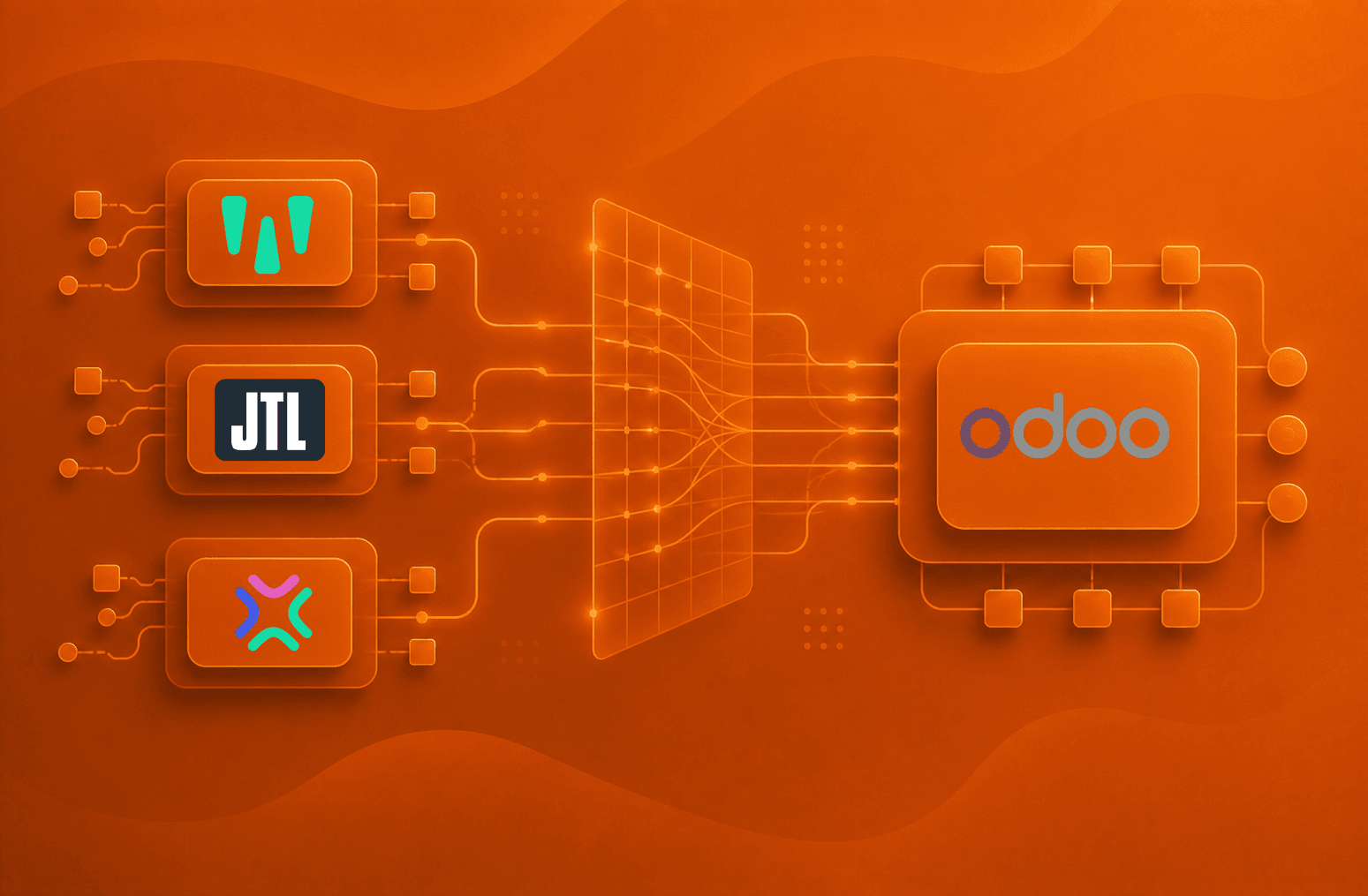
Switching ERP from weclapp, Xentral or JTL to Odoo: How companies migrate cleanly (process, risks and common mistakes)

ERP Implementation: 7 Risks That Make Projects Fail (and How to Spot Them Early)

Best-of-Breed vs. Best-of-Suite in Mid-Market: HubSpot vs. Odoo in a Reality Check

Controlling ERP in E-Commerce: How to Scale Without Losing Financial Control

Customer Service ERP: How to Integrate Service, ERP and Logistics Properly

E-Commerce Accounting ERP: When 60,000 Monthly Bookings Break Your System

E-Commerce Logistics & ERP: Why Fulfillment Becomes Structural at Scale
Made with🫀in Berlin © 2026 bobco GmbH
Made with🫀in Berlin © 2026 bobco GmbH
Made with🫀in Berlin © 2026 bobco GmbH